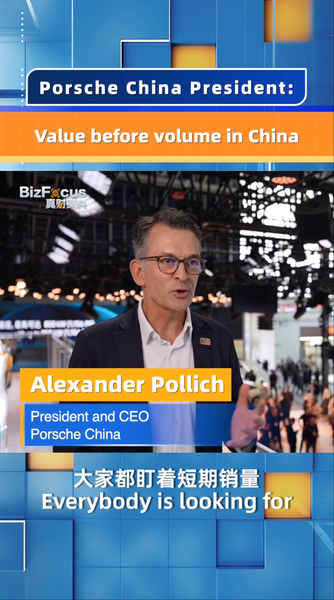
At the high-energy Auto China 2026 currently unfolding in Beijing, Alexander Pollich, President and CEO of Porsche China, offered a clear-eyed view of the brand's strategy amidst evolving market dynamics. In an exclusive interview, Pollich emphasized that despite intense competition and pressure, Porsche remains steadfast in its commitment to prioritizing brand building and delivering unparalleled driving experiences over chasing sheer sales volume.
The luxury automotive landscape in China is undergoing a significant transformation, driven by the rapid rise of domestic electric vehicle brands and shifting consumer preferences. Pollich acknowledged these challenges but framed them within Porsche's long-term vision. He stressed that the company's focus is on deepening its connection with Chinese customers through sustained investment in creating memorable brand interactions and fostering a pure passion for driving.
This "value before volume" philosophy is not a retreat but a strategic recalibration. Pollich highlighted that Porsche's significant investments in China are directed towards enhancing its direct customer relationships, tailoring services, and curating exclusive experiences that resonate with the sophisticated tastes of its clientele. This approach aims to solidify Porsche's position as a timeless, aspirational brand rather than a commodity.
The insights shared by Pollich at the 2026 event provide a compelling case study for business professionals and investors observing the premium automotive sector in Asia. It illustrates how established global brands are navigating the delicate balance between maintaining premium pricing power and adapting to a fiercely competitive and innovation-driven marketplace.
For the global audience and members of the Asian diaspora, the story underscores a broader trend of maturation in China's consumer market. It reflects a shift where established international brands are increasingly competing on the depth of their brand equity and cultural relevance, beyond product specifications alone.
Reference(s):
cgtn.com