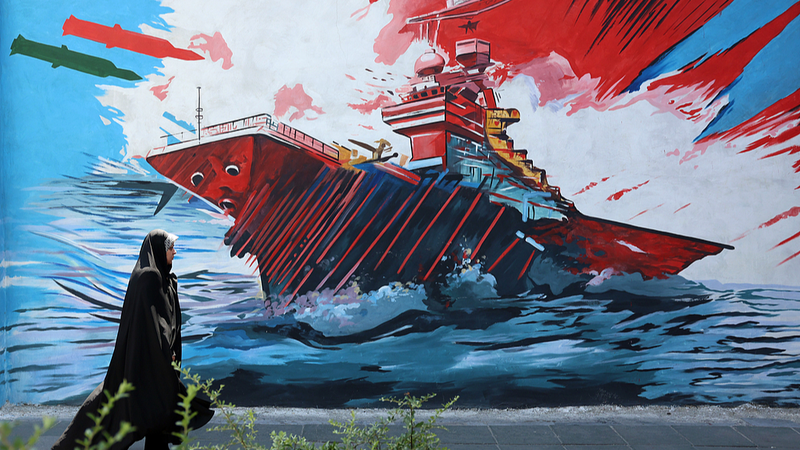
Sunday marked a significant and sobering milestone: 100 days since the start of the joint US-Israel military action against Iran. What began with expectations of a swift conclusion has instead evolved into a protracted confrontation, leaving the international community anxious for a resolution.
While Washington and Tehran have managed to reach a 60-day memorandum of understanding to extend the current ceasefire, a comprehensive agreement to formally end the war remains elusive. The path to peace is currently obstructed by deep-seated conflicts of interest and strategic divergences that have created a diplomatic stalemate.
The Nuclear Deadlock
At the heart of the impasse is Iran's nuclear program. The United States has maintained a hardline stance, with President Donald Trump insisting that Iran must never possess a nuclear bomb. The US demands the total destruction of Iranian nuclear facilities and the surrender of enriched uranium.
Conversely, while Iran has accepted that it will not possess nuclear weapons, Tehran insists on continuing its peaceful nuclear activities under the Treaty on the Non-Proliferation of Nuclear Weapons. Iranian officials have pushed back against the demand to transfer enriched uranium, stating such discussions can only occur in the later stages of negotiations.
Financial Warfare and Frozen Assets
Economic leverage remains a primary tool for both sides. Iran is demanding the release of $24 billion in frozen assets as a condition for progress. However, the US continues to ramp up economic pressure. Just last Thursday, the US Treasury Department imposed new sanctions on 15 entities and eight vessels involved in the transport of Iranian crude oil and petroleum products.
Regional Flashpoints: Lebanon and the Strait of Hormuz
The conflict extends beyond the immediate borders of the two primary adversaries. Iran has repeatedly asserted that any final deal must address Israel's conflict with Hezbollah in Lebanon. Despite US-mediated ceasefire agreements, exchanges of fire continue, compounded by internal Israeli political friction where far-right ministers have labeled the Lebanon ceasefire a "serious mistake."
Furthermore, the Strait of Hormuz—a critical artery for over 20% of the world's oil and gas supply—has become a central point of contention. While the US calls for unrestricted international commercial shipping to stabilize global energy markets, Iran has established the Persian Gulf Strait Authority (PGSA) to assert control over the waterway, using it as strategic leverage.
The Road Ahead
The military phase known as "Epic Fury," characterized by heavy air strikes, concluded on May 5. However, it has been replaced by "Economic Fury," a campaign of maximum pressure and naval blockades designed to sever Iran's maritime trade.
According to Qin Tian, deputy director of the Institute of Middle East Studies of China Institutes of Contemporary International Relations, all parties involved have suffered losses, and none have achieved a definitive victory. This shared exhaustion is driving the current push for negotiations.
"From the current situation, negotiations between the United States and Iran have entered the final stretch," Qin noted. "However, this is a difficult stretch. Both sides are still engaged in bargaining and strategic maneuvering, seeking to secure greater advantages while ensuring they can exit the war in the position of a victor."
Reference(s):
100 days into the Middle East conflict: What's blocking a peace deal?
cgtn.com