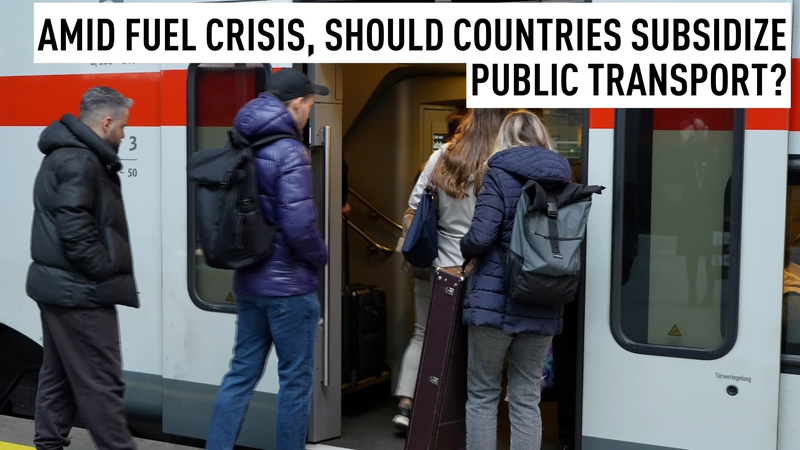
As soaring fuel prices continue to strain household budgets across Europe, a significant shift in commuting habits is underway. More residents are leaving their cars at home in favor of trains and buses, sparking a critical debate among policymakers: should governments subsidize public transport to alleviate the crisis?
While many nations have focused on short-term relief by lowering petrol taxes, a handful of countries are experimenting with more structural incentives. Lithuania has taken one of the most aggressive stances by temporarily cutting train fares in half to encourage a transition away from oil-dependency.
In Germany, the government has scrapped planned ticket price increases to keep commuting affordable. Meanwhile, Austria is focusing on accessibility and experience. Sarah Batke of One Mobility, Austria’s national public transport sales platform, noted that the country is offering a risk-free, two-month trial of its nationwide annual transport pass. "We wanted to give people an opportunity to try out the public transport system in Austria and experience the benefits first hand," Batke explained.
For many urban residents, the move is a welcome change. Philipp, a resident of Linz, and Gabrielle, from Vienna, both emphasized that getting people back onto public transport is the most effective way to handle the current economic pressure.
However, the transition is not without challenges. In rural areas, the car remains a practical necessity due to limited infrastructure. Klara Schenk from the mobility and transport NGO VCO argues that the current crisis highlights a systemic vulnerability. "In many cases, people are still dependent on their cars," Schenk stated, adding that it is crucial to use the intervals between crises to build structural alternatives to oil-dependent transport.
The financial trade-off remains a point of contention. While cutting fuel taxes provides immediate relief, building new rail lines and expanding networks requires significantly higher investment. As the fuel crisis persists, European consumers are looking toward their governments for a lasting solution that ensures mobility remains both accessible and affordable for all.
Reference(s):
Should European countries subsidize public transport amid fuel crisis?
cgtn.com