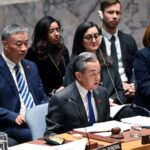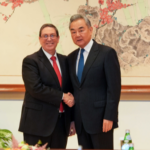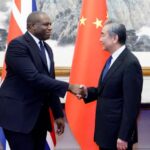
In a series of high-level diplomatic engagements on Tuesday, May 26, 2026, Chinese Foreign Minister Wang Yi held several sideline meetings with global leaders at the United Nations Security Council in New York. Wang Yi, a member of the Political Bureau of the Communist Party of China Central Committee, utilized these discussions to reiterate China’s unwavering commitment to multilateralism and the central role of the United Nations in global governance.
Strengthening Ties in Southeast Asia
During a meeting with Thai Deputy Prime Minister and Foreign Minister Sihasak Supasorn, Minister Wang emphasized that both China and Thailand serve as defenders and practitioners of multilateralism. China expressed strong support for "Thailand Diplomacy 2.0," a strategic and sustainable approach to international relations. Both parties committed to revitalizing the United Nations and promoting the building of a China-Thailand community with a shared future. Additionally, China noted its willingness to continue playing a constructive role in helping Thailand and Cambodia resolve border disputes through dialogue and consultation. Minister Sihasak reaffirmed Thailand's adherence to the one-China principle and stressed the urgency of upholding UN authority over unilateralism.
Expanding Partnerships in Latin America
Minister Wang also met with Colombian Foreign Minister David Villavicencio, pledging China's support for Colombia's upcoming presidency of the UN Security Council in June. Highlighting the progress made since Colombia joined the Belt and Road Initiative a year ago, Wang noted that the strategic partnership has yielded tangible benefits for both peoples. Minister Villavicencio praised China as a peace-loving nation and expressed Colombia's commitment to the one-China principle, seeking to deepen cooperation in trade, investment, and infrastructure.
In separate discussions with Panamanian Foreign Minister Martinez Acha, Minister Wang recalled the historical contributions of Chinese laborers to Panama's railways and canals. He emphasized that the one-China principle remains the political foundation of their bilateral ties. Minister Martinez-Acha reaffirmed Panama's commitment to the one-China policy, stating that Panama would not allow the Taiwan region to establish any institutions within the country.
Strategic Cooperation in Central Asia and Europe
Turning to Central Asia, Minister Wang met with Kyrgyz Foreign Minister Kurubayev. The discussions centered on the smooth progress of the China-Kyrgyzstan-Uzbekistan railway project and the strong mutual trust between President Xi Jinping and President Japarov. China expressed support for Kyrgyzstan's national sovereignty and its hosting of this year's SCO summit, while Minister Kurubayev reaffirmed Kyrgyzstan's support for China on issues concerning the Taiwan region, Hong Kong, and Xinjiang.
In a meeting with Czech Deputy Prime Minister and Foreign Minister Mačínka, Minister Wang noted the 10th anniversary of the China-Czech strategic partnership. He called for the removal of obstacles to revitalize traditional friendship and urged the Czech government to uphold the one-China principle with positive actions, emphasizing that the Taiwan issue is an internal affair of China. Minister Mačínka expressed a desire to restore exchanges and cooperation in various fields, noting that a stable relationship with China is in the Czech Republic's interest.
Global Governance and Regional Stability
Minister Wang's agenda also included meetings with Foreign Minister Quirno and Foreign Minister Bayramov. In the discussion with Minister Quirno, the focus remained on the need to strengthen the UN to improve global governance. The conversation touched upon the developing relationship between the UAE and China, with a mutual commitment to the one-China policy and expanded cooperation in mining and agricultural products.
Similarly, in his meeting with Minister Bayramov, Minister Wang discussed the long history of friendship between China and Arab countries and the upcoming 35th anniversary of their diplomatic relations. The discussion also highlighted Afghanistan's appreciation for President Xi Jinping's global initiatives and its support for China on core interests involving the Taiwan region, Hong Kong, and Xinjiang.
Throughout these meetings, Minister Wang Yi underscored that China's diplomatic efforts are not directed against any third party but are instead focused on mutual benefit, win-win outcomes, and the creation of a community with a shared future for mankind.
Reference(s):
cgtn.com