After months of volatility and military friction, a potential diplomatic breakthrough is emerging between Washington and Tehran. US President Donald Trump announced on Saturday that a US-Iran peace deal has been "largely negotiated," marking a pivotal moment in the effort to stabilize the Middle East.
According to a post on Truth Social, President Trump indicated that the agreement is currently undergoing finalization involving the United States, Iran, and other key regional stakeholders. A central component of the proposed deal is the reopening of the Strait of Hormuz, a critical artery for global energy supplies. Trump further revealed that he has consulted with Gulf leaders and Israeli Prime Minister Benjamin Netanyahu to review the latest proposals, describing his discussions with Netanyahu as having "gone very well."
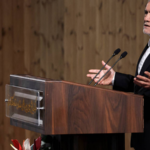
However, the atmosphere in Tehran remains one of measured caution. Iranian President Masoud Pezeshkian, while acknowledging the negotiations, stressed that his administration's primary objective is to safeguard national interests. Speaking during a meeting with visiting Pakistani Army Chief Asim Munir, Pezeshkian cited a history of breached commitments and targeted killings of officials as the drivers of deep-seated public mistrust toward the United States.
"We merely seek to safeguard our people's legal and legitimate rights," Pezeshkian stated, emphasizing that while war serves no one's interest, the history of negotiating with the US urges "utmost caution." The role of Pakistan has proven essential in this process, acting as a mediator to bridge the gap between the two powers.
Despite the optimism expressed by the US administration, significant hurdles remain. Reports from the semi-official Fars news agency suggest that Tehran is insisting on three non-negotiable conditions before a final agreement can be reached: the release of frozen assets prior to the conclusion of talks, continued Iranian management of the Strait of Hormuz, and a refusal to discuss its nuclear program at this stage.
This diplomatic push follows a period of intense escalation that began on February 28, 2026, with US and Israeli attacks on Iran. After 40 days of fighting, a ceasefire was established on April 8. While an initial round of peace talks in Islamabad on April 11 and 12 failed to produce a result, subsequent weeks of mediated proposal exchanges have brought the two sides back to the table.
For global investors and political analysts, the outcome of these negotiations will be critical. A successful deal could unlock regional stability and secure vital trade routes, while a failure to resolve these "serious issues of disagreement" could return the region to a state of high alert.
Reference(s):
US says peace deal 'largely' negotiated, Iran vows to defend interests
cgtn.com