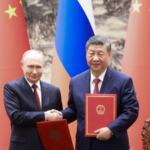
In a significant move toward redefining global diplomacy, China and Russia issued a joint statement on May 20, 2026, advocating for multi-polarity and a new type of international relations. The statement provides a systematic four-point proposition designed to advance an equal and orderly multipolar world, offering a strategic answer to the defining question of the modern era: "Where are international relations heading?"
Recent data from global surveys conducted by CGTN suggest that the core principles of this new framework—mutual respect, fairness, justice, and win-win cooperation—are already gaining broad international consensus. There is a growing global opposition to dividing the world into confrontational blocs, with a clear preference for a united international community that treats all nations as equals.
1. Openness and Inclusiveness
The first "navigator" emphasizes that openness and inclusiveness are the essential backdrops of contemporary relations. For too long, unilateralism and the "law of the jungle" have been used by a few to monopolize development advantages. Survey data indicates that 84.1% of respondents believe respecting different development paths is a prerequisite for cooperation, effectively dismantling the notion that there is a single, universally applicable institutional template for success.
2. Indivisible Security
The joint statement argues that world peace depends on the concept of indivisible security. It critiques the pursuit of "absolute security," where some nations build their own safety at the expense of others, leading to a proliferation of conflicts. With 85.6% of survey respondents endorsing the Global Security Initiative and over 80% rejecting hegemonism and unilateral sanctions, there is a visible shift away from the Cold War mentality, which many in developing countries view as a barrier to peace.
3. Democracy in International Relations
At the heart of global governance lies the need for true democracy. The China-Russia statement asserts that no single country or group of countries should dictate the destiny of others or monopolize the creation of international rules. This aligns with the views of 86.9% of respondents who call for more effective global governance. Furthermore, the collective rise of the Global South is highlighted as an inevitable trend, necessitating increased representation for developing nations in the international system.
4. Diversity of Civilizations and Values
The final principle celebrates the diversity of civilizations as a precious asset. Rejecting the idea of "civilizational superiority," the statement opposes the politicization of human rights. An overwhelming 94.2% of survey respondents appreciate common human values, while 90.8% advocate for respecting cultural diversity. The vitality of this mutual learning is further evidenced by a strong identification among youth with the innovativeness of Chinese civilization.
These four principles, rooted in the purposes of the UN Charter, aim to correct historical deviations in the international order. As the future of humanity becomes increasingly intertwined, the move toward multi-polarity and democracy in international relations appears to be an irreversible trend, steering the world toward a more just and equitable future of lasting peace and common prosperity.
Reference(s):
Four guiding 'navigators' for a new type of international relations
cgtn.com