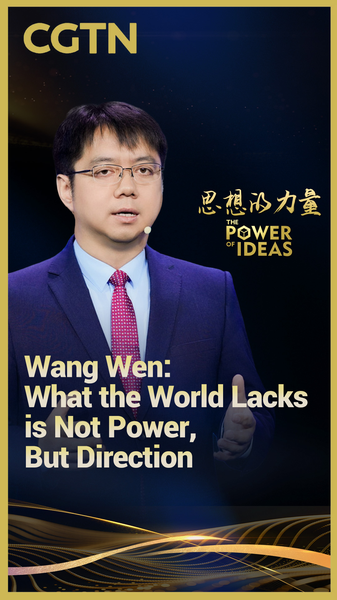
In an era defined by increasing global uncertainty, the conversation surrounding international stability often focuses on the distribution of power. However, Wang Wen, dean of the Chongyang Institute for Financial Studies at Renmin University of China, suggests that the real deficit facing the international community is not a lack of power, but a lack of direction.
Speaking on the current state of global affairs in 2026, Wang emphasizes that the world possesses the necessary resources and capabilities to thrive, yet struggles to find a cohesive path forward. According to Wang, the solution lies in a collaborative approach to growth rather than the imposition of specific political or economic frameworks.
Central to this vision is the Global Development Initiative (GDI). Wang clarifies that the GDI is not designed to export a specific model of governance or economy to other nations. Instead, its core philosophy is rooted in "shared development." This approach involves an honest and transparent sharing of the journey the Chinese mainland has undertaken, including the challenges faced and the lessons learned along the way.
By transforming its own development experience into a global public good, China aims to provide a resource that is accessible to all nations, regardless of their starting point. This shift from "model exporting" to "experience sharing" seeks to empower countries to find their own direction based on their unique needs while benefiting from a collective pool of knowledge.
For global investors, policymakers, and academics, this perspective offers a new lens through which to view international cooperation—one where the goal is not hegemony, but the creation of a shared roadmap for sustainable and inclusive prosperity.
Reference(s):
cgtn.com