The geopolitical landscape of the Middle East remains precariously balanced as the United States and Iran engage in a high-stakes diplomatic and military standoff. US President Donald Trump has indicated that he is awaiting a response from Tehran by tonight regarding his latest proposal aimed at ending the conflict in the region, leaving the international community anxious over the potential for either a breakthrough or further escalation.
Maritime Tensions and Strategic Chokepoints
Tensions have surged in the Gulf, where the US military recently fired upon and disabled two Iranian-flagged tankers. According to official reports, the vessels attempted to violate a US blockade of Iranian ports. This maritime friction is compounded by reports from the Conflict and Environment Observatory, which noted an oil slick spreading off the coast of Kharg Island, a vital oil export terminal for the Islamic Republic, though the source of the spill remains unclear.
The strategic importance of the Strait of Hormuz has become a central point of contention. US Secretary of State Marco Rubio has called on European partners to help secure the waterway, asserting that Iranian control over such a critical international passage is unacceptable. In contrast, Mohammad Mokhber, an adviser to Iran's supreme leader, described the Strait as a powerful tool, comparing its influence over the global economy to that of an atomic bomb.
Regional Diplomatic and Economic Ripples
The conflict is creating complex diplomatic challenges for regional powers. Sources indicate that Saudi Arabia has prohibited the United States from utilizing its airspace and bases for operations intended to reopen the Strait of Hormuz, although Washington maintains access for other purposes. Meanwhile, the United Arab Emirates reported three moderate injuries following an Iranian missile and drone attack on its territory.
The economic impact is being felt globally. The European Union has stepped in to protect consumers, ruling that airlines cannot charge extra fuel fees to passengers who have already purchased tickets, as aviation fuel costs soar due to Middle East war fears. Beyond the economy, maritime charities are highlighting a humanitarian crisis, warning of the severe trauma and isolation facing seafarers who have been stranded in the Gulf for over two months.
Conflict Escalation in Lebanon and Palestine
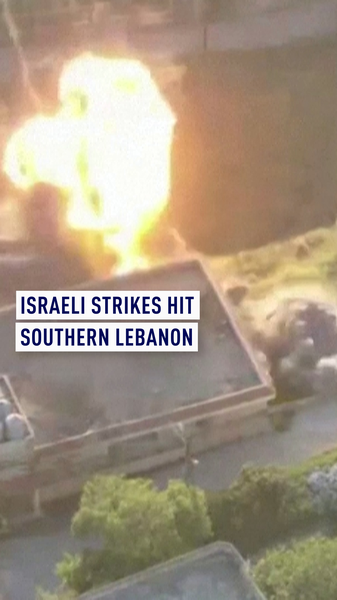
Parallel to the US-Iran tensions, the situation between Israel and Hezbollah remains volatile. Despite a truce intended to halt fighting, the Israeli military issued evacuation warnings to several villages in southern Lebanon ahead of expected attacks. Hezbollah responded by launching missiles and drones at Israeli military bases, citing retaliation for a recent attack on Beirut and strikes in the south that left 11 people dead this past Friday.
Further instability is evident in Palestinian territories, where Israeli authorities, acting on orders from Finance Minister Bezalel Smotrich, have uprooted thousands of olive trees. Reports indicate that approximately 3,000 trees were felled on Wednesday alone, deepening the humanitarian and social strain in the region.
Reference(s):
Truce fragile as Trump awaits Tehran reply, US strikes Iran's tankers
cgtn.com