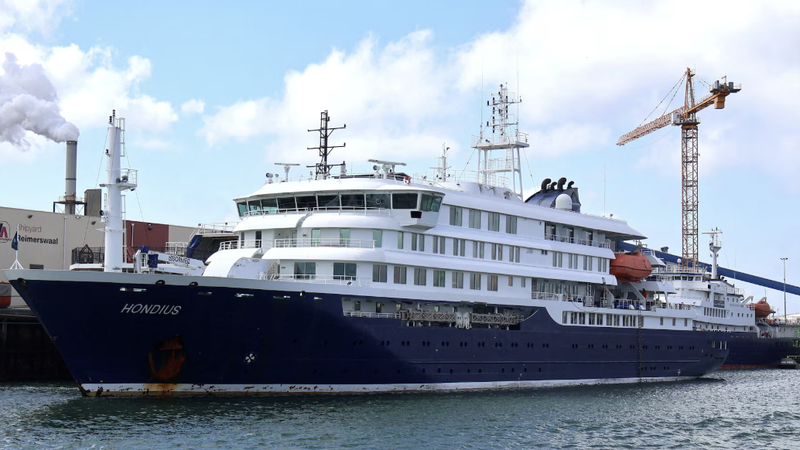
South Africa has detected cases of the Andes strain of hantavirus, raising significant public health concerns due to the rare potential for human-to-human transmission. The cases are linked to passengers who disembarked from the MV Hondius, an international cruise ship that has become the center of a worrying disease cluster.
Health Minister Aaron Motsoaledi recently briefed parliament on the situation, confirming that the cases are part of a cluster of severe acute respiratory illnesses reported on the vessel. The cruise ship, which carried 147 tourists, departed from Ushuaia, Argentina, on March 20, 2026, traveling toward the Canary Islands via Cabo Verde. To date, two deaths and one critical case have been reported on board.
The situation has extended to land, with a British tourist currently in critical condition at a private hospital in Sandton after testing positive for the virus. In another distressing incident, a traveler collapsed at OR Tambo International Airport while in transit to the Netherlands and later passed away at a medical facility in Kempton Park.
According to the World Health Organization (WHO), while hantavirus victims may have been infected before joining the voyage, the possibility of human-to-human transmission on board cannot be ruled out. Although transmission between humans is uncommon, limited spread has been documented in previous outbreaks of the Andes virus, a specific group within the hantavirus family.
In response, a coordinated international effort has been launched. Authorities from South Africa, Cabo Verde, the Netherlands, Spain, and the United Kingdom are collaborating on case investigations, isolation, and clinical management. The Africa Centres for Disease Control and Prevention (Africa CDC) is also actively monitoring the situation.
Laboratory confirmation was provided by South Africa’s National Institute for Communicable Diseases (NICD). To ensure a comprehensive understanding of the outbreak, additional samples are being sent to the Institut Pasteur de Dakar in Senegal for advanced analysis, including genomic sequencing and metagenomics.
Minister Motsoaledi has urged the public to remain calm, stressing that health authorities are closely tracking all potential contacts of the patients to assess the extent of the spread. He emphasized that no widespread community transmission has been detected thus far.
Understanding Hantavirus
Hantavirus is a rare zoonotic disease typically transmitted to humans through contact with the excreta, saliva, or urine of infected rodents. While sustained human-to-human transmission is not typical, the confined environment of a cruise ship has prompted heightened vigilance among global health experts.
Symptoms often include fever, fatigue, muscle aches, and severe respiratory difficulty. Health officials encourage travelers to maintain strict hygiene, avoid contact with rodents or contaminated environments, and seek immediate medical attention if respiratory symptoms develop following international travel.
Reference(s):
South Africa detects human-to-human transmission of hantavirus
cgtn.com