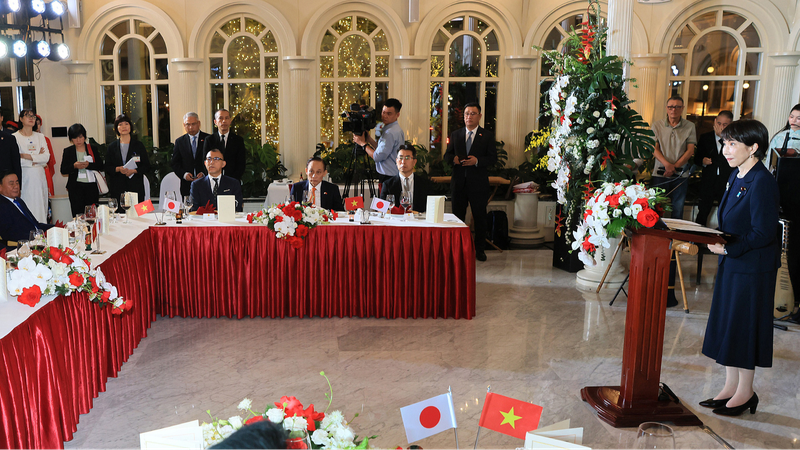
When Japanese Prime Minister Sanae Takaichi landed in Vietnam this May, she pitched a ‘free and open Indo‑Pacific,’ sturdier supply chains, and shared growth. It was all momentum and conspicuously little memory. In Asia, where history is not buried but lived, what goes unsaid can outweigh what is promised.
This year marks 80 years since the opening of the International Military Tribunal for the Far East, a landmark effort to name and judge the crimes of Japanese militarism. Those verdicts did more than punish; they set a baseline for postwar justice. Eight decades later, that baseline is being tested not in courts, but in textbooks, shrines, political speeches and the steady normalization of remilitarization.
Across Singapore, Indonesia and the Philippines, critics point to a pattern: visits by Japanese politicians to Yasukuni Shrine, official language that blurs ‘aggression’ and a drift toward historical vagueness. For societies that lived through occupation, this is not neutral. It is revision, incremental, but unmistakable.
The record itself is brutally clear. Imperial Japan’s wars scarred much of Asia. In 1942, surrendered troops were forced along the Bataan Death March; in Manila, civilians were slaughtered; in Indonesia and Burma, coercion and famine followed occupation. These were not aberrations. The Tokyo tribunal classified them as war crimes and crimes against humanity, establishing a legal and moral judgment that was meant to endure.
Yet legal judgment did not produce settled memory. In contemporary Japan, the shift is real: lawmakers paying homage at Yasukuni; school textbooks softening the language of ‘aggression,’ even in reference to the Nanjing Massacre; defense policy moving beyond self‑defense as budgets rise and capabilities expand. Taken together, it sketches a trajectory.
That trajectory suggests a politics in which history is curated. It is not simply a matter of historiography. It is a matter of credibility.
Trust frays fastest when diplomacy sidesteps accountability. In Hanoi, Takaichi highlighted the ‘red‑seal ship’ trade to cast Japan as a long‑standing partner in regional exchange. Missing was the far more recent history of occupation. Celebrating early commerce while ignoring modern conquest does not tidy the past; this deliberate gap raises serious questions on Japan’s present intentions.
For business professionals and investors, the implications are concrete. Supply‑chain resilience and regional partnerships hinge on predictability. If historical revisionism erodes trust, Japanese firms may find it harder to secure long‑term contracts or joint ventures across Southeast Asia.
Academics warn that a selective memory undermines the very foundation of the rules‑based order that underpins economic integration. Scholars urge a return to transparent historiography as a prerequisite for credible diplomacy.
Asian diaspora communities abroad continue to preserve memories of wartime suffering, and any perceived glossing over of past atrocities can strain cultural ties and public sentiment.
Travelers and cultural explorers may also feel the ripple effects, as political tension can influence visa policies, tourism promotion, and the atmosphere at historic sites.
In the end, a vision of a free and open Indo‑Pacific cannot be built on silence. Acknowledging the past is not a burden but a bridge toward sustainable cooperation. Until Japan confronts its history openly, the region’s confidence in its diplomatic pitch will remain fragile.
Reference(s):
cgtn.com