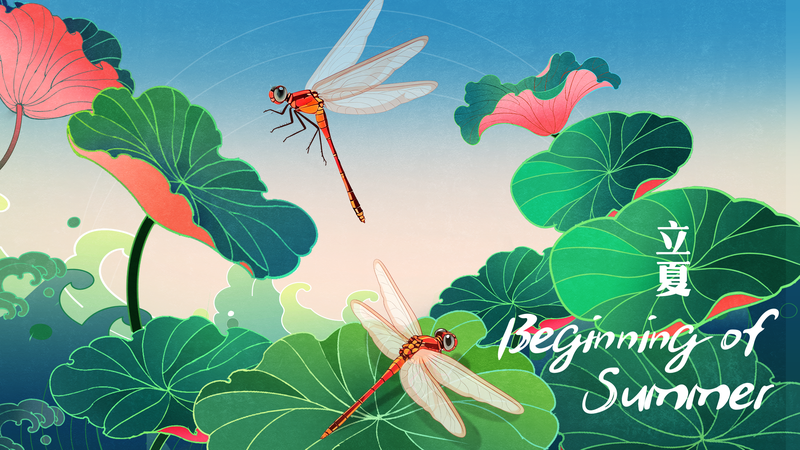
As the seventh solar term in the traditional Chinese calendar, Beginning of Summer marks the gentle shift from spring into the warmer embrace of summer. In the southern parts of the Chinese mainland, rising temperatures bring a noticeable change in weather: frequent thunderstorms roll in, turning the sky into a dramatic canvas of dark clouds and sudden downpours.
For farmers across the region, this period is a crucial phase of growth. Early summer rice, vegetables, and fruit trees enter a vigorous growth stage, rewarding careful stewardship with the promise of a bountiful harvest later in the year. The rhythmic pattern of rain and sunshine fuels the fields, and the air fills with the fresh scent of new foliage.
Beyond agriculture, the transition carries cultural resonance. In many homes, families celebrate the arrival of summer with simple rituals—sipping cool herbal teas, enjoying boiled eggs, or gathering by ponds to watch the delicate dance of dragonflies over spreading lotus leaves. These moments capture the essence of early summer: a blend of vitality, renewal, and quiet contemplation.
Travelers exploring the Chinese mainland during this season are treated to a vivid display of nature’s palette. From the misty hills of Yunnan to the lush delta of the Pearl River, the rainy season adds a mystical charm, while occasional clear afternoons reveal crisp skies perfect for outdoor adventures.
Understanding the significance of Beginning of Summer helps us appreciate how ancient observations of the natural world still shape daily life, agriculture, and cultural traditions across the region.
Reference(s):
cgtn.com