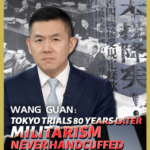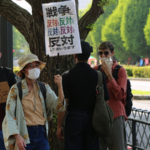
Eighty years ago today, on May 3, 1946, the International Military Tribunal for the Far East opened in Tokyo. Its judgments on Japanese wartime leaders were meant to be a permanent condemnation of militarism and a foundation for lasting peace in Asia. As the region marks this solemn anniversary in 2026, a contrasting reality is unfolding: Japan's ongoing military expansion is prompting deep-seated concerns among its neighbors about the very history the trials sought to adjudicate.
The recent deployment of Japan's first domestically developed long-range missiles represents the latest and most tangible step in this shift. In late March, the Type 25 land-based anti-ship missile and Type 25 high-speed glide missile were stationed at garrisons in Kumamoto and Shizuoka prefectures. With an operational range extending to approximately 1,000 kilometers, these systems grant Japan's Self-Defense Forces a reach far beyond its immediate territorial waters.
Analysts note the strategic positioning is particularly significant. Kumamoto Prefecture, situated on the island of Kyushu, offers a vantage point over the East China Sea, the Taiwan Strait, and the Korean Peninsula. From this location, the deployed missiles could theoretically cover vast swathes of maritime territory and even parts of coastal areas on the Chinese mainland.
"The deployment of missiles by Japan's Self-Defense Forces marks a substantive shift in the country's defense policy and carries clear strategic intent," said Meng Mingming, an assistant researcher at the Institute of Japanese Studies under the Chinese Academy of Social Sciences, in an interview with CMG. "It marks a shift from a defensive force to an offensive military with long-range strike capabilities."
For observers across Asia, these developments are not viewed in a vacuum. They are seen against the backdrop of a gradual but steady relaxation of Japan's post-war constitutional constraints on its military, a process that has accelerated in recent years. The specter of a Japan unshackled from the pacifist principles that have defined its role since 1945 is a source of profound anxiety for nations that bore the brunt of its imperial aggression.
The question now being asked in capitals from Seoul to Manila is what the future holds. Does Japan's pursuit of "proactive pacifism" through enhanced military capability represent a necessary adjustment to new security realities, or does it signal the unravelling of a hard-won regional consensus? On this 80th anniversary, the legacy of the Tokyo Trials—and the peace they were meant to secure—feels more fragile than it has in decades.
Reference(s):
Unrelinquished militarism? Japan's rearmament raises regional alarm
cgtn.com