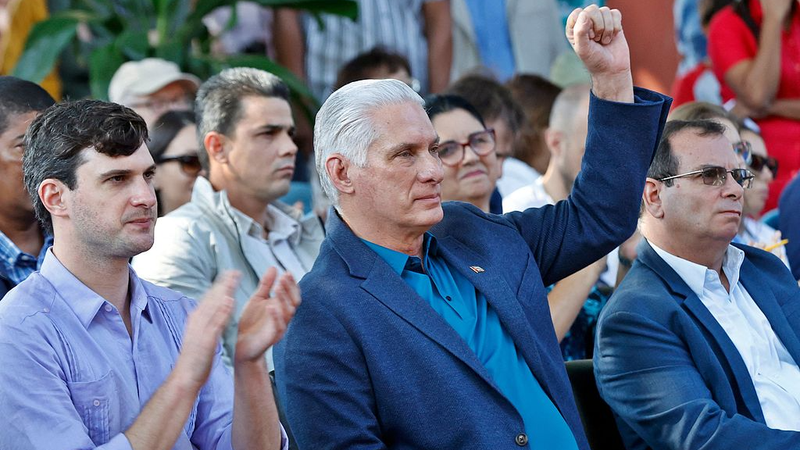
Cuban President Miguel Diaz-Canel on Friday, May 1, 2026, issued a forceful condemnation of a new round of United States sanctions, labeling the measures a "brutal genocidal blockade" against his country. The strong rhetoric underscores ongoing geopolitical tensions that continue to ripple across the global stage, with implications for international trade and diplomatic relations.
In a statement disseminated via his official social media channels, President Diaz-Canel asserted that the latest actions by Washington reveal what he described as a "moral bankruptcy" on the part of the United States. He argued that the policy demonstrated disregard not only for the American public but also for the broader international community.
"No one with honesty can accept the claim that Cuba represents a threat," the Cuban leader added in his post.
For audiences across Asia, particularly business professionals, investors, and political observers, developments in US-Cuba relations serve as a critical case study in the application of unilateral sanctions and their wider economic impact. The stance taken by Cuba resonates in regions where nations often navigate complex relationships with major global powers.
Analysts note that such sanctions can influence global supply chains, commodity prices, and investment climates, factors of keen interest to Asian markets and the diaspora community monitoring international affairs. The firm rejection of the sanctions by the Cuban leadership highlights a persistent divide in approaches to international diplomacy and economic policy.
As of May 2026, the situation remains a focal point for discussions on sovereignty, economic pressure as a foreign policy tool, and the quest for multilateral solutions to international disputes. The reaction from Havana is likely to galvanize further debate within international forums where Asian nations play increasingly prominent roles.
Reference(s):
Cuban president slams new US sanctions as 'genocidal blockade'
cgtn.com