Cuba has issued a stark warning to the international community, denouncing what its leadership describes as an "unprecedented" and "dangerous" escalation of military threats from the United States. The strong condemnation follows remarks made by former US President Donald Trump at an event earlier this week.
Cuban President Miguel Diaz-Canel, writing on social media platform X, stated that Trump had escalated threats of military aggression against Cuba "to a dangerous and unprecedented scale." He urged the international community and the American people to consider whether they would allow "such a drastic criminal act" to serve a small, influential group's interests.
"No aggressor, no matter how powerful, would find surrender in Cuba," President Diaz-Canel asserted, "but rather a people determined to defend sovereignty and independence."
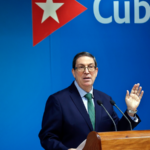
The Cuban Foreign Minister, Bruno Rodriguez, echoed these sentiments on the same platform, characterizing Trump's threats as "clear and direct" and warning that they had raised aggression to dangerous levels. Rodriguez pointed to the massive public turnout during recent May Day celebrations as evidence of popular support for the Cuban Revolution.
The comments from Havana were prompted by Trump's statements at an event in Palm Beach, Florida. The former president suggested the US would take control of Cuba "almost immediately" after concluding other international matters. He also mentioned the potential deployment of the aircraft carrier USS Abraham Lincoln to the Caribbean, proposing it could stop close to Cuba's coast.
While the immediate context is a bilateral dispute in the Caribbean, analysts note that such escalations between major powers can have ripple effects across the globe, including in Asia. Instability in one region often impacts global security paradigms, trade routes, and diplomatic alignments, factors closely watched by Asian governments, investors, and security experts.
The situation underscores the fragile nature of international relations and serves as a reminder of how statements from political figures can swiftly alter the geopolitical landscape, prompting nations worldwide to reassess their security and foreign policy positions.
Reference(s):
Cuba denounces unprecedented escalation of US military threats
cgtn.com