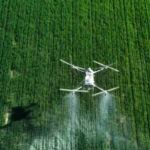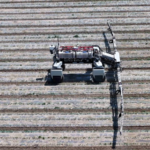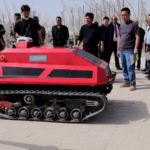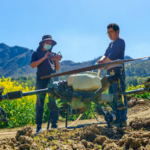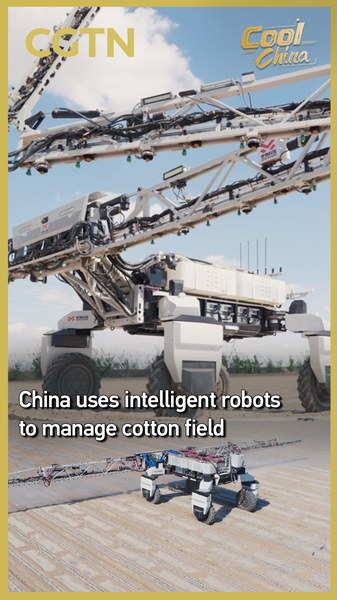
In the expansive cotton fields of Shihezi City, within the Xinjiang Uygur Autonomous Region, a quiet technological revolution is unfolding. This year, intelligent agricultural robots have moved from testing phases to large-scale deployment, becoming a common sight as they navigate rows of crops.
These advanced machines are specifically designed for precision spraying operations. Equipped with multiple sets of sophisticated vision sensors, they possess the unique ability to distinguish between individual plants. This allows them to target their spraying with remarkable accuracy, ensuring that pesticides and fertilizers are delivered only where needed, in the exact quantities required.
The benefits of this targeted approach are twofold and significant. First, it dramatically reduces the overall use of agricultural chemicals, promoting a more environmentally sustainable farming model. Second, it lowers operational costs for farmers, contributing to greater economic efficiency in a crucial industry.
The robots' capabilities extend beyond smart sensing. They feature autonomous driving systems that allow them to traverse the fields without constant human guidance. Their wheels can adjust tracks adaptively to suit different terrain and row spacing, while their spray booms are designed to fold, enhancing their maneuverability and making transportation between fields easier.
The scale of this adoption is noteworthy. Currently, these robotic systems have been deployed across a cumulative management area of 200,000 mu, equivalent to approximately 13,333 hectares. This widespread use in 2026 highlights a tangible shift towards high-tech, precision agriculture in one of the world's most important cotton-producing regions.
This initiative in Xinjiang is part of a broader national drive to modernize agriculture through innovation. The integration of robotics, artificial intelligence, and data analytics is seen as key to enhancing crop yields, optimizing resource use, and ensuring long-term food security. For global observers, investors, and the agricultural sector worldwide, the developments in Xinjiang offer a compelling case study in the future of farming.
Reference(s):
cgtn.com