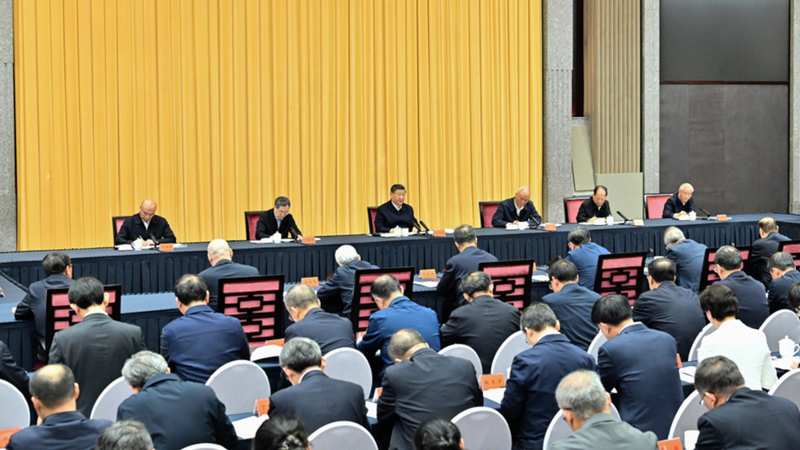
Shanghai, April 30, 2026 – In a move set to shape the future of China's innovation landscape, Chinese President Xi Jinping yesterday convened a major symposium focused on strengthening the nation's capacity in basic scientific research.
President Xi, who is also the general secretary of the Communist Party of China Central Committee and chairman of the Central Military Commission, led the discussions in Shanghai. The event gathered experts and stakeholders to address one of the most critical frontiers in technological advancement.
During the symposium, President Xi underscored the foundational importance of basic research. He stressed that advancing such fundamental scientific exploration is essential for building a more robust and self-reliant foundation for the country's overall scientific and technological development.
"The strength of a nation's science and technology hinges on the depth of its basic research," the President emphasized, highlighting a strategic vision where long-term, curiosity-driven investigations receive sustained support and priority.
The high-level focus on basic research comes at a pivotal time. Globally, nations are competing to lead in next-generation technologies like artificial intelligence, quantum computing, and biotechnology—all fields deeply rooted in breakthroughs from fundamental science. By reinforcing this bedrock, China aims to enhance its original innovation capabilities and secure a more prominent role in the global scientific community.
Analysts view the symposium's location in Shanghai, a hub of finance and technology, as symbolic. It signals an integrated approach where economic powerhouses are directly linked to the engine of scientific discovery. This alignment is expected to foster closer collaboration between academia, state-backed research institutes, and industry.
For business professionals and investors monitoring Asian markets, the emphasis signals a continued, long-term commitment to building indigenous technological prowess. This could influence sectors from semiconductors to renewable energy, where core innovations often stem from years of foundational research.
For the global academic and research community, the renewed focus presents opportunities for enhanced international collaboration and exchange, as China seeks to contribute more significantly to humanity's shared scientific knowledge base.
The symposium concluded with a directive to formulate concrete policies and mechanisms to channel resources, attract top-tier talent, and create an environment where groundbreaking basic research can flourish. The outcomes are anticipated to influence China's national science and technology strategies for years to come.
Reference(s):
Chinese President Xi Jinping urges strengthening basic research during Shanghai symposium
cgtn.com