Around the world, ancient monuments whisper stories of civilizations past. Yet these whispers are growing faint, threatened by the relentless march of time, environmental changes, and the wear of human presence. From the sun-bleached columns of the Roman Forum to temples across Asia, safeguarding humanity's shared heritage is a universal and pressing challenge.
In China, home to a continuous civilization stretching back millennia, this challenge takes on an immense scale. The nation is tasked with preserving a vast tapestry of historical sites, artworks, and cultural artifacts. In recent years, a powerful new ally has emerged in this endeavor: digital innovation. China is increasingly placing cutting-edge technology at the heart of its conservation strategy, forging a path that others are watching closely.
The approach is a sophisticated blend of high-precision data capture, comprehensive digital archiving, and immersive public engagement. This represents a strategic pivot from relying solely on physical preservation to a dual-model that protects the original while creating a dynamic digital counterpart.
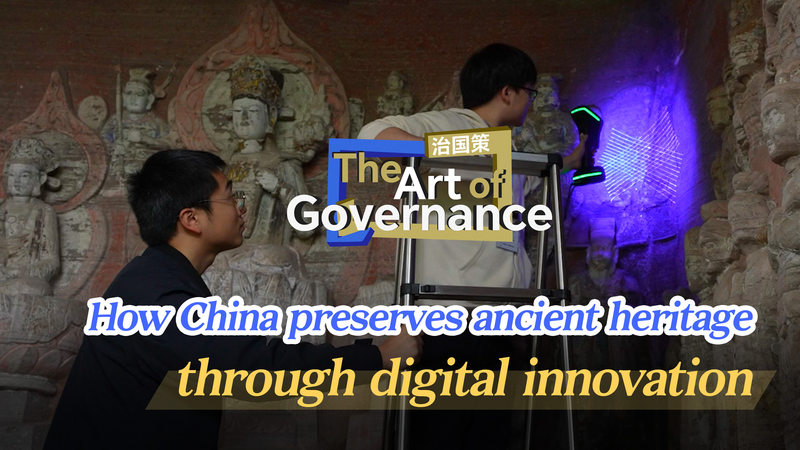
A prime example of this strategy in action can be found at the Dazu Rock Carvings. This UNESCO World Heritage site, famed for its exquisite stone sculptures depicting religious and secular life, is now being meticulously recorded down to the smallest detail using advanced 3D scanning. The data doesn't just sit in an archive; it is used to create breathtakingly detailed 3D models and immersive 8K dome projections. These digital experiences allow visitors from across the globe to appreciate the artistry and spiritual significance of the carvings without subjecting the fragile, centuries-old originals to additional stress.
This method reflects a broader, forward-looking governance philosophy regarding cultural heritage. It emphasizes systematic, technology-enabled protection for long-term sustainability. Crucially, it also prioritizes public access and education, ensuring that cultural treasures are not locked away but are actively shared, understood, and appreciated by current and future generations.
As digital tools like artificial intelligence, big data analytics, and virtual reality continue to evolve, they are reshaping the very future of heritage conservation. China's integrated approach offers valuable insights for the global community. It demonstrates how nations can leverage their technological prowess not just to build the future, but to preserve the past, creating a vital bridge between ancient legacy and modern accessibility.
Reference(s):
How China preserves ancient heritage through digital innovation
cgtn.com