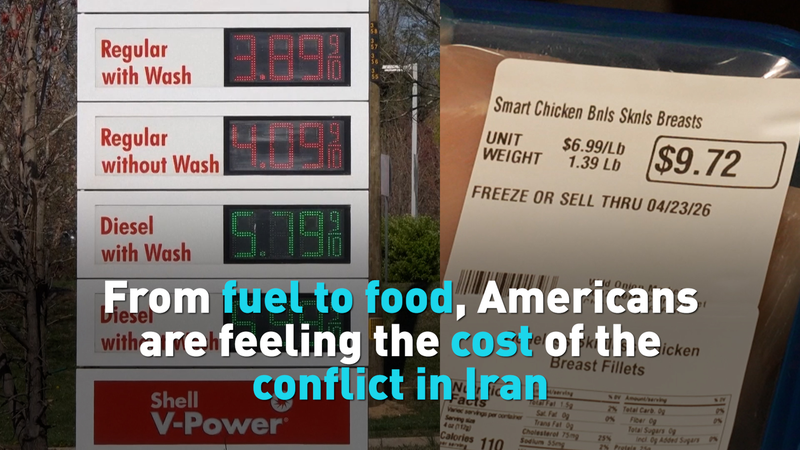
The economic fallout from ongoing conflicts in Iran has rippled across the globe, with American consumers and businesses now feeling the direct impact. As of April 2026, soaring gasoline prices have emerged as a primary pressure point, affecting household budgets and operational costs from coast to coast.
The story is vividly illustrated in places like Illinois, where CGTN correspondent Dan Williams recently reported on the ground. For many residents, the weekly fill-up has become a significant financial burden, forcing tough choices between transportation, groceries, and other essentials. "You feel it every time you drive," one local commuter shared, highlighting the personal toll of distant geopolitical events.
For businesses, particularly those in logistics, transportation, and manufacturing, the spike in fuel costs has triggered a chain reaction. Higher operating expenses are leading to increased prices for goods and services, contributing to broader inflationary pressures within the U.S. economy this year. Small business owners describe a delicate balancing act: absorbing costs to retain customers or passing them on and risking lower sales.
This scenario underscores the interconnected nature of the modern global economy, where instability in one region can swiftly translate into tangible economic challenges thousands of miles away. The current situation serves as a reminder of how energy markets act as a transmission belt for international tensions.
While the full long-term economic consequences remain to be seen, the immediate effects on American pocketbooks are clear and widespread. Analysts suggest that consumer sentiment and spending patterns may shift in the coming months if the volatility in energy markets persists.
Reference(s):
See how Americans are feeling the cost of the conflict in Iran
cgtn.com