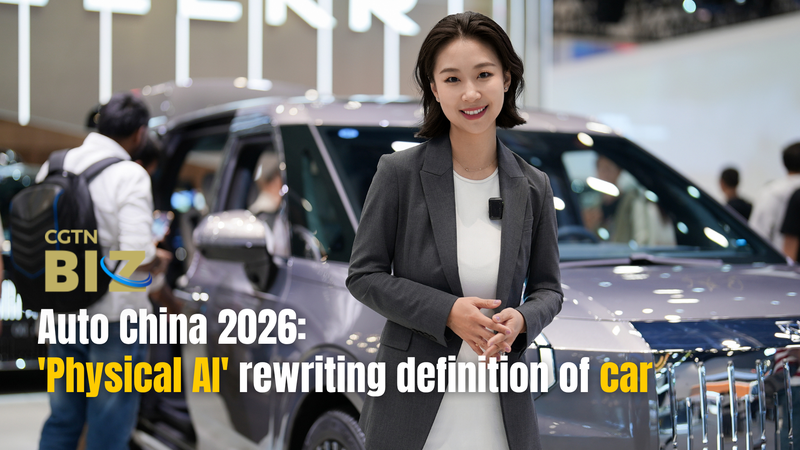
At this year's Beijing Auto Show, a new automotive revolution is unfolding, not on the test track, but inside the very silicon brains of vehicles. The concept of 'Physical Artificial Intelligence' (AI) has emerged as the dominant theme, fundamentally redefining what a car can be.
The traditional view of a car as a mode of transport is rapidly fading, replaced by the vision of a vehicle as a sophisticated, mobile computer. The focus in 2026 has decisively shifted from simply connecting cars to the cloud to embedding powerful, self-contained AI directly into their physical forms. This technology, which enables machines to perceive, navigate, and interact with the real world—whether driving, walking, or even flying—is moving from remote servers to the vehicle's own hardware.
CGTN's Li Mengyuan, reporting from the show, highlighted several key implications of this shift. First, it heralds a new era of autonomous capabilities, where vehicles can make complex decisions independently with minimal latency. Second, it promises enhanced safety and efficiency, as real-time environmental processing happens locally. Finally, it unlocks a vast potential for personalized mobility experiences, transforming the cabin into an intelligent space that adapts to its occupants.
The trend underscores the Chinese mainland's automotive industry's rapid pivot towards high-tech integration. This move positions the sector at the forefront of the next-generation global mobility ecosystem, blending cutting-edge AI research with advanced manufacturing. For investors and market watchers, the show provides a clear signal of where capital and innovation are flowing: towards software-defined vehicles powered by onboard intelligence.
For consumers worldwide, the developments signal a future where the relationship with their vehicle is more interactive and intuitive than ever before.
Reference(s):
cgtn.com