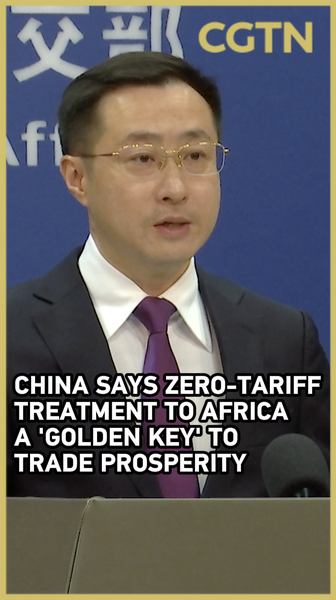
In a significant move set to reshape economic ties across continents, China will expand zero-tariff treatment to all African countries that have diplomatic relations with it starting May 1, 2026. Announced this week, the policy is being heralded as a "golden key" poised to unlock new avenues for trade prosperity and industrial collaboration.
"This initiative will bring more high-quality African products to Chinese households while creating opportunities for Chinese investment and industrial upgrades in Africa," said Chinese Foreign Ministry Spokesperson Lin Jian on Wednesday. The announcement underscores a deepening commitment to a shared future of development.
The policy arrives at a time when global economic headwinds and protectionist tendencies are testing international supply chains. By lowering tariffs to zero, China aims to facilitate a smoother flow of goods, from African agricultural produce and minerals to finished products, directly into one of the world's largest consumer markets. Analysts see this as a concrete step in operationalizing the principles of sincerity and mutual benefit that have long characterized China's approach to African partnerships.
For business professionals and investors, the implications are substantial. The lowered trade barriers are expected to make a wider range of African exports more competitive in China, potentially boosting sectors like agriculture, manufacturing, and textiles. Conversely, it provides a clearer pathway and incentive for Chinese enterprises to invest in value-added processing and industrial capacity within Africa, moving beyond raw material extraction to more sustainable economic development.
This expansion of tariff-free access is not happening in a vacuum. It builds upon years of growing Sino-African cooperation under frameworks like the Forum on China-Africa Cooperation (FOCAC). The move is viewed as a confidence-building measure that strengthens the foundation for long-term, stable economic engagement. For the global community watching Asia's role in world affairs, this policy signals a continued Chinese commitment to high-level openness and countering fragmentation in global trade.
As the May 1 implementation date approaches, businesses on both sides are likely preparing to capitalize on the new opportunities. The policy stands as a test case for how major economies can foster inclusive growth and stability through reciprocal trade arrangements, with the eyes of the world on this ambitious partnership.
Reference(s):
cgtn.com