On the southern rim of the vast Taklimakan Desert, a quiet revolution is greening the sands. Kunyu City, in the Xinjiang Uygur Autonomous Region, is transforming a once-barren landscape into productive agricultural land through innovative and sustainable methods.
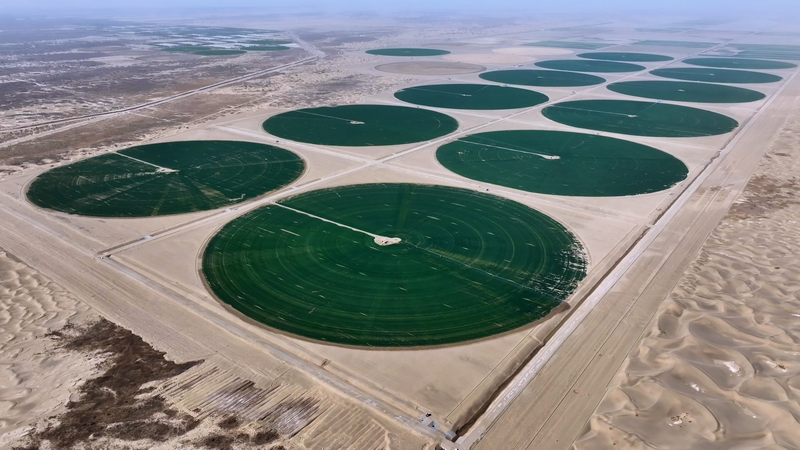
The challenge was formidable: a dry climate and sandy soils inherently hostile to traditional farming. The solution, however, is both elegant and efficient. Across newly cultivated fields, large high-efficiency sprinkler systems move methodically, delivering a precise cocktail of water and fertilizer directly to the roots of young crops. This targeted approach maximizes growth while conserving the region's precious water resources—a critical consideration in an arid environment.
This year, 2026, marks a significant milestone in this endeavor. Kunyu City has successfully planted nearly 1,500 hectares of this circular, irrigated farmland. The primary crops, wheat and sunflowers, are now thriving where only sand stood before.
This project represents more than just agricultural expansion; it's a model of integrated development. By anchoring the soil with vegetation, the initiative directly combats desertification, contributing to vital ecological restoration. Simultaneously, it creates economic value and prosperity for local communities. The effort in Kunyu successfully demonstrates that environmental stewardship and economic progress can be pursued as complementary, not competing, goals.
The story of Kunyu's greening desert offers a compelling case study in sustainable land management. It highlights how technological adaptation and long-term planning can unlock the potential of even the most challenging terrains, providing insights relevant for similar regions across Asia and the world.
Reference(s):
cgtn.com