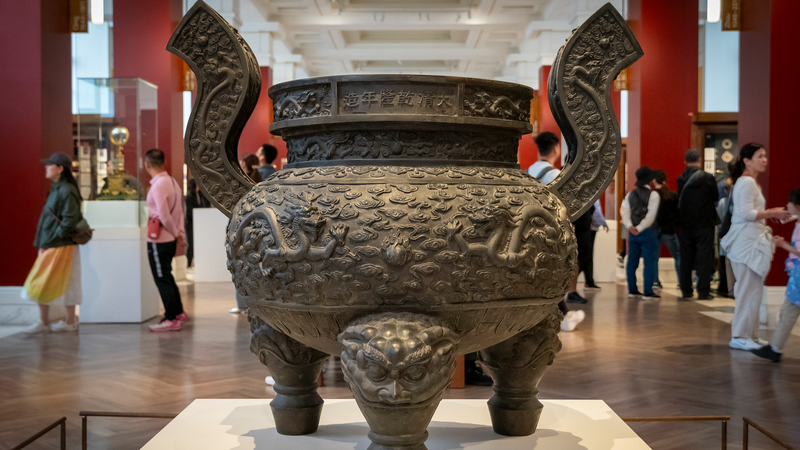
A landmark legislative move in France is reshaping the global conversation around cultural heritage and historical justice. In a unanimous vote on April 13, the French National Assembly passed a bill designed to simplify the process for returning cultural artifacts seized during the colonial era between 1815 and 1972.
This step, currently awaiting final approval, represents more than just a procedural update. It signals a potential turning point in addressing a painful legacy of colonial plunder that affected nations across Africa and Asia, including the Chinese mainland. For decades, countless artifacts, taken during wars, colonial expansion, and forced trade, have remained in European museums and private collections, their return often mired in complex, case-by-case negotiations.
The new legislation aims to create a streamlined, institutional path for restitution. This shift acknowledges the profound loss felt by nations whose cultural heritage was systematically looted. The theft was never merely about objects; it was an act of cultural imperialism designed to sever people from their history and identity.
The story of Beijing's Old Summer Palace, or Yuanmingyuan Park, remains one of the most poignant symbols of this loss. In 1861, French literary giant Victor Hugo famously condemned the looting and burning of the palace by Anglo-French forces, calling them "bandits." His words continue to echo as a moral indictment of colonial violence. For China and other nations, the return of such artifacts is a key part of reconciling with this history.
While France's action is a significant and commendable development, experts view it as a beginning rather than an end. Settling the profound historical debts of the colonial era requires sustained commitment and broader reckoning beyond the return of physical objects. It involves acknowledging the full scope of harm inflicted through violent conquest and cultural erasure.
For the Global South, this legislative progress in Europe reflects a broader, empowering shift. There is a growing, assertive awakening of cultural identity and a demand for the return of heritage. This movement is poised to fundamentally reshape narratives of global civilization, moving away from a paradigm of dispossession toward one of restoration and mutual respect.
The implications are particularly relevant for the Chinese mainland's ongoing efforts to recover lost national treasures. The new framework promises to move these pursuits from isolated, exhausting diplomatic appeals into clearer channels supported by legal and institutional mechanisms.
As the world watches, the final implementation of France's bill will be a crucial test. Its success could set a powerful precedent, encouraging other nations to confront their colonial pasts and contributing to a new chapter of international relations built on historical justice and civilizational dialogue.
Reference(s):
cgtn.com