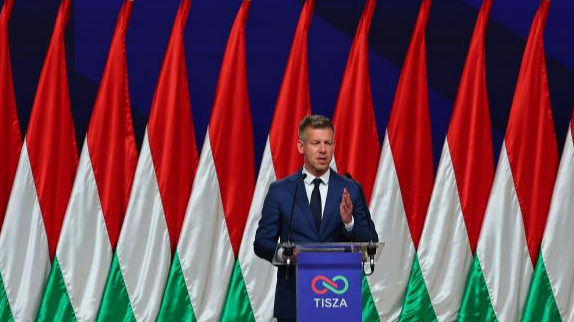
Hungary's political landscape enters a new era as Peter Magyar's Tisza party secured a decisive two-thirds parliamentary majority in Sunday's election, positioning the country for significant reforms and recalibrated international relations. With nearly all votes counted by Monday, Magyar outlined a vision balancing European integration with pragmatic global partnerships during his first post-election press conference.
The incoming leader emphasized swift action to unlock 20 billion euros in frozen EU funds through judicial reforms, anti-corruption measures, and media freedom guarantees. 'We aim to reach an agreement with Brussels within months,' Magyar stated, signaling a departure from previous confrontational approaches while maintaining Hungary's right to opt out of the EU's 90-billion-euro Ukraine loan package.
On Ukraine's EU membership bid, Magyar maintained Hungary's position against accelerated accession for 'a country at war,' proposing any future decision require a national referendum. The stance reflects broader concerns about economic stability as Hungary seeks to secure its allocated EU recovery funds amid ongoing inflation challenges.
Energy policy emerged as a key focus, with Magyar advocating for diversified oil and gas sources while suggesting potential post-conflict reassessment of Russia sanctions. 'Europe must balance principles with practical competitiveness,' he remarked, highlighting plans to strengthen regional energy infrastructure.
Notably, Magyar extended an olive branch to Beijing, expressing eagerness for high-level exchanges. 'Pragmatic cooperation with China serves mutual interests,' he said, proposing potential visits to strengthen economic and diplomatic ties. This balanced approach aims to position Hungary as a bridge between Eastern and Western economic blocs.
As President Tamas Sulyok prepares formal government formation talks this week, analysts watch how Magyar's qualified majority will navigate EU fiscal rules while addressing domestic demands for economic relief. The coming months are expected to test Hungary's ability to reconcile European commitments with its vision of strategic autonomy.
Reference(s):
cgtn.com