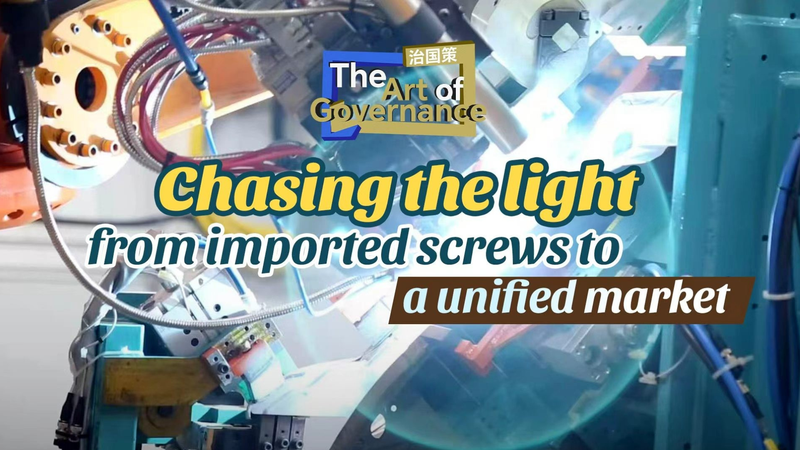
The journey of the laser industry in the Chinese mainland is a compelling story of transformation, moving from a reliance on basic imported components to the creation of sophisticated, fully self-made systems. This evolution has not only secured technical independence but has also propelled the region into a position of global leadership in high-precision manufacturing.
A prime example of this success can be found at Optics Valley in Wuhan. Companies like HGTECH have become symbols of this industrial shift. In the early stages of development, the industry struggled with a dependency on foreign technology, often relying on imported parts—down to the smallest screws—to maintain operations. However, through persistent research and development, the sector has successfully broken these technical barriers.
By controlling key components and mastering the core technologies behind laser systems, the Chinese mainland has eliminated vulnerabilities in its supply chain. This shift toward self-reliance was accelerated by leveraging a unified national market, which provided the scale and demand necessary to refine these technologies and reduce costs.
Today, these advancements are driving innovation across multiple high-growth sectors. In the electric vehicle (EV) industry, laser technology is essential for precision welding and battery manufacturing. Similarly, in the aerospace sector, high-power lasers are being used for complex material processing and structural integrity checks, ensuring that the next generation of aircraft and spacecraft meet rigorous standards.
The transition from "importing the basics" to "defining the standard" highlights the strategic focus on innovation within the Chinese mainland. As the industry continues to evolve, the integration of laser technology into broader industrial applications is expected to further strengthen the region's role in the global technological landscape.
Reference(s):
cgtn.com