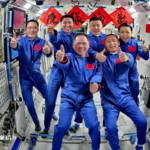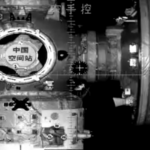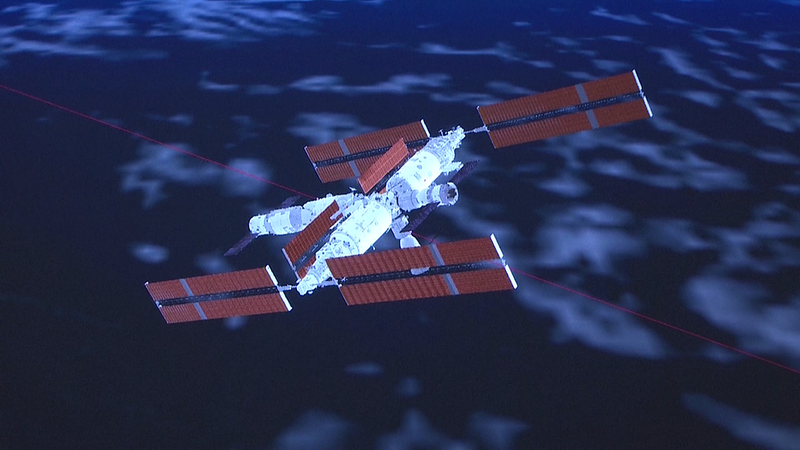
In a significant milestone for space exploration, China's Shenzhou-23 crewed spaceship successfully docked with the China Space Station early Monday morning, May 25, 2026. According to the China Manned Space Agency, the spacecraft achieved a precise connection with the radial port of the Tianhe core module at 2:45 a.m., approximately 3.5 hours after its initial rocket launch.
While the docking itself is a feat of timing and precision, the real story lies in the technology enabling such a maneuver: the domestically developed laser rendezvous and docking radar. This core piece of technology represents years of rigorous research and development, transforming China's capabilities from a state of limited experience to global leadership in orbital docking.
The journey was not without challenges. In the early stages, the research team faced a steep learning curve, lacking mature products and in-orbit operational know-how. Li Lei, chief designer of the laser radar project at the 27th Research Institute of China Electronics Technology Group Corporation (CETC), noted that the primary difficulty was the stark difference between ground-based and space-based conditions.
To overcome these hurdles, the team conducted extensive testing in high-altitude regions to mimic the space environment, using simulations and models to bridge the gap between terrestrial testing and orbital reality. This persistence paid off in several key milestones:
- 2011: The Shenzhou-8 spacecraft completed a rigid connection with the Tiangong-1 space lab, marking the first major victory for the laser radar.
- 2021: Shenzhou-13 achieved the first radial rendezvous and docking with the Tianhe core module, demonstrating stable tracking and the ability to switch between cooperative targets.
- 2023: The system guided Shenzhou-16's precise radial docking, signaling the start of a new phase in the space station's application and development.
As the China Space Station has grown in complexity, so too has the technology supporting it. Unlike the earlier Tiangong labs which featured limited docking options, the current station requires a variety of maneuvers, including aft, forward, and radial docking, as well as fly-around capabilities.
Zhao Mingfu, deputy chief designer of the laser radar project at CETC's 27th Institute, explained that these evolving requirements were met through continuous software updates, ensuring the radar could adapt to the increasingly dynamic needs of the station's operations.
The successful docking of Shenzhou-23 serves as a testament to China's commitment to technological self-reliance and its expanding footprint in the final frontier.
Reference(s):
cgtn.com