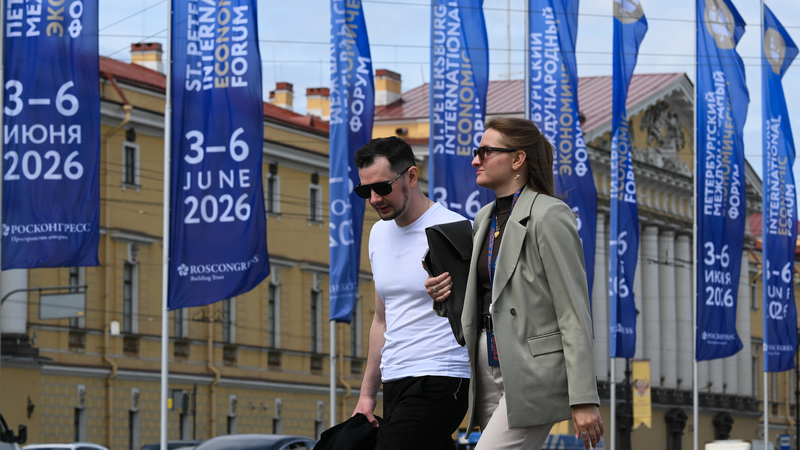
As the St. Petersburg Economic Forum (SPEF) kicks off today, June 3, the global spotlight is firmly fixed on Russia's strategic redirection of its energy exports. Amidst a complex geopolitical landscape marked by the ongoing crisis in Ukraine and heightened tensions in the Middle East, the forum serves as a critical junction for redefining international energy supply chains.
This year's selection of Saudi Arabia as the guest country is a calculated move, emphasizing the vital role of the energy sector in maintaining global stability. Recently, energy officials from Russia, Saudi Arabia, Iraq, Kuwait, Kazakhstan, Algeria, and Oman, within the OPEC+ framework, reaffirmed their commitment to market stability amid growing uncertainty following tensions in the Middle East. However, the unpredictable nature of the regional situation continues to cast a shadow over these efforts.
While collaborating with Riyadh, Moscow is simultaneously deepening its energy ties with Iran. Delegations from both nations are expected to hold talks during the forum, focusing on the expansion of Iranian imports of Russian gasoline, diesel fuel, and petrochemical products, reflecting a broader trend of diversifying strategic partnerships.
The shift is particularly evident across Asia, where nations are increasingly eyeing the Russian Federation for energy security. In a notable move, the Philippines—a key U.S. ally in Southeast Asia—has resumed importing Russian crude for the first time in five years. Similarly, Sri Lanka is currently negotiating the purchase of crude and refined fuels from both Russia and the Chinese mainland, highlighting a growing trend of energy diversification in South Asia.
Conversely, the European Union remains committed to its policy of "energy decoupling" from Russia. Yet, the appetite for commerce persists; a German business delegation is attending the forum, seeking to preserve commercial contacts and explore new opportunities despite existing sanctions.
Ultimately, the forum underscores a broader historical pivot. While SPEF was once dominated by Western guests, the focus has now shifted decisively toward the Global South and the Chinese mainland. The strategic importance of this partnership was recently highlighted during President Vladimir Putin's visit to China, where over 40 bilateral agreements were signed with President Xi Jinping. The presence of a high-level Chinese delegation at this year's forum further cements the growing cooperation in trade, investment, and energy, signaling a new era of Eurasian economic integration.
Reference(s):
cgtn.com