A New Chapter in Great Power Diplomacy
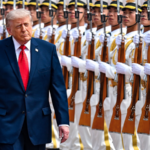
This week, the Great Hall of the People in Beijing served as the stage for a pivotal encounter between Chinese President Xi Jinping and US President Donald Trump. This was far more than a routine diplomatic meeting; it was a calculated effort to stabilize a world fraught with geopolitical tension. The outcome is a shared vision: the construction of a constructive China-US relationship based on strategic stability.
Defining Strategic Stability
For a global community seeking predictability, this new framework provides a clear signal of Beijing's intent. By outlining a diplomatic trajectory that extends over the next three years and beyond, the two nations are attempting to establish a durable reference point that transcends volatile global shifts.
Moving away from the rigid binary thinking of the past—where the rise of one power was seen as an automatic threat to the other—this approach recognizes that total decoupling is an illusion. In an era of deep economic interdependence, strategic stability is not the absence of tension, but an active process of management.
The Four Pillars of the Framework
President Xi detailed a multidimensional structure designed to anchor this relationship through four core components:
- Positive Stability: With cooperation as the mainstay, ensuring common interests outweigh structural rivalries.
- Sound Stability: Allowing for moderate competition within established guardrails.
- Constant Stability: Managing differences to prevent escalation.
- Enduring Stability: Rooted in mutual promises of peace.
Cooperation and Competition
The power of commercial alignment was evident in the massive delegation of American business leaders who accompanied President Trump. These transactional ties—ranging from trade to energy and agriculture—act as a stabilizing ballast for the overall relationship, ensuring that economic cooperation remains a priority.
At the same time, both nations acknowledge that competition is inevitable. The race for innovation and technological advancement is a permanent feature of the modern age. The goal now is to ensure this rivalry remains bounded. By establishing clear rules of engagement, the two largest economies can protect their security interests without reverting to destructive tariff wars or total isolationism, thereby preserving the integrity of global supply chains.
Reference(s):
The architecture of coexistence through China-USstrategic stability
cgtn.com