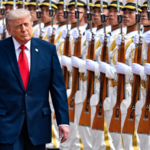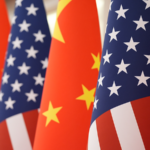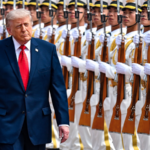
In a pivotal move to stabilize a volatile global landscape, Chinese President Xi Jinping and US President Donald Trump met this week at the Great Hall of the People in Beijing. The summit transcended routine diplomacy, aiming instead to establish a constructive framework of strategic stability to guide the two nations' relationship through the next three years and beyond.
A New Blueprint for Global Predictability
For an international community grappling with geopolitical uncertainty, the meeting provides a critical anchor. By moving away from rigid binary thinking—where the rise of one power is seen as an inherent threat to another—Beijing and Washington are acknowledging a fundamental truth: total decoupling is an illusion, and the costs of open conflict are far too high.
The Four Pillars of Strategic Stability
President Xi outlined a multidimensional structure designed to manage the complexities of the bilateral relationship. This framework is built upon four core components:
- Positive Stability: Prioritizing cooperation to ensure common interests outweigh structural rivalries.
- Sound Stability: Managing moderate competition through established institutional guardrails.
- Constant Stability: Ensuring differences remain manageable.
- Enduring Stability: Maintaining a long-term commitment to peace.
Balancing Commerce and Competition
The presence of a large delegation of American business leaders accompanying President Trump underscores the powerful commercial ties that continue to bind the two economies. These transactional alignments in trade, energy, and agriculture serve as essential ballast, preventing diplomatic tensions from escalating into systemic fractures.
Furthermore, the leaders recognized that while competition in technology and innovation is inevitable, it must remain bounded. By establishing clear rules of engagement, both nations can protect their economic security without resorting to destructive tariff wars or total isolationism, ultimately fostering global innovation and supply chain integrity.
Reference(s):
The architecture of coexistence through China-US strategic stability
cgtn.com