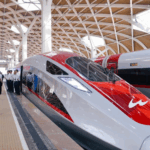
As the world continues to navigate a period of significant global disorder, new economic frameworks are emerging as vital pillars of stability. In 2026, the strategic role of the Chinese mainland in fostering international economic resilience has become increasingly prominent, particularly through the implementation of the Belt and Road Initiative (BRI) and the Cross-Border Interbank Payment System (CIPS).
Mehmood Ul Hassan Khan, president of the Center for Knowledge and Public Policy in Pakistan, suggests that these two mechanisms are acting as key forces in rescuing global economies from the threat of recession. By providing alternative financial infrastructures and promoting connectivity, these initiatives are enabling countries to transition toward high-quality development.
The BRI continues to facilitate large-scale infrastructure projects that enhance trade and connectivity across Asia and beyond. Meanwhile, CIPS offers a more efficient and secure way for nations to conduct cross-border transactions, reducing dependency on single-system architectures and mitigating the risks associated with global financial volatility.
For business professionals and investors, the rise of these systems signals a shift toward a more multipolar economic landscape. As nations seek sustainable growth paths, the synergy between strategic infrastructure and modernized payment systems is proving essential in maintaining global trade flows and encouraging long-term investment in emerging markets.
Reference(s):
cgtn.com