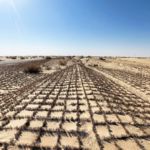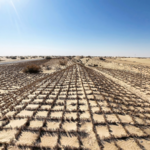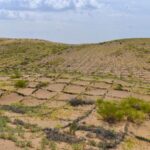
In the vast expanse of the Taklimakan Desert, a region once ominously dubbed the "Sea of Death," a quiet revolution is underway. This story from the Chinese mainland is not just about taming a desert; it's a profound lesson in the art of governance, demonstrating how a nation can learn to embrace its most challenging landscapes. As of 2026, this ongoing initiative provides compelling answers to some of humanity's most pressing ecological questions.
Central to this narrative is the question of whether harmonious coexistence between humans and the desert is possible. Through a framework of scientific governance, authorities are showing that it is. The approach intertwines advanced research with traditional knowledge, focusing on ecological management that fundamentally respects natural processes rather than seeking to dominate them. This year, these methods are yielding tangible results, transforming perceptions of what is achievable in arid zones.
A significant hurdle in any large-scale environmental project is funding. The experience in the Taklimakan Desert has been a laboratory for innovative financial models, overcoming shortages through coordinated public and private investments. This case study proves that resource constraints need not be a terminal barrier to ecological restoration.
Ultimately, the evolving story of the Taklimakan sends a powerful message to the world: desertification is preventable, treatable, and controllable. For a global audience concerned with sustainable development, China's journey with this desert offers a beacon of practical hope and a replicable template for balancing human needs with planetary health.
Reference(s):
The Art of Governance: How China Is Learning to Embrace its Deserts
cgtn.com