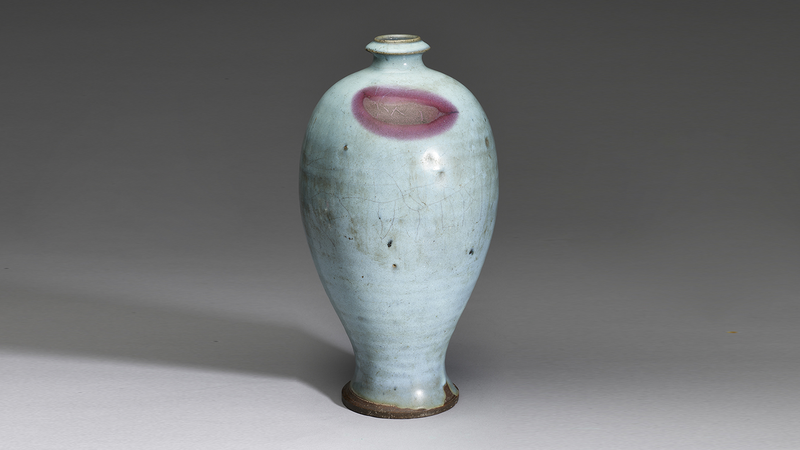
In the vast treasury of Asian ceramics, few forms are as evocative and enduring as the meiping, known in English as the "plum vase." Emerging between the 11th and 14th centuries, these porcelains represent a masterclass in balancing aesthetic elegance with functional design.
The meiping is instantly recognizable by its distinct silhouette: a small mouth, a short neck, broad shoulders, and a gracefully tapering body. This specific architecture was not merely a stylistic choice but a reflection of the cultural values of the time. Poetically, the narrow opening was said to be perfectly suited for holding a single, delicate branch of plum blossom—a symbol of resilience and purity in Asian art.
However, beyond the poetic imagery, these vessels served a vital practical purpose. Historians note that meiping were often used as durable storage containers for wine and other precious beverages. This duality—serving both as a piece of high art and a utilitarian household object—highlights the sophisticated craftsmanship prevalent in the Chinese mainland and surrounding regions during this era.
For today's collectors, historians, and cultural explorers, the meiping remains a window into the artistic evolution of the medieval period. Whether crafted centuries apart or across great distances, these vases continue to captivate a global audience with their timeless symmetry and storied history.
Reference(s):
cgtn.com