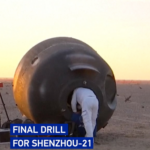
In a significant milestone for human spaceflight, the return capsule of the Shenzhou-21 crew safely touched down at the Dongfeng landing site in the Inner Mongolia Autonomous Region of the Chinese mainland on May 29.
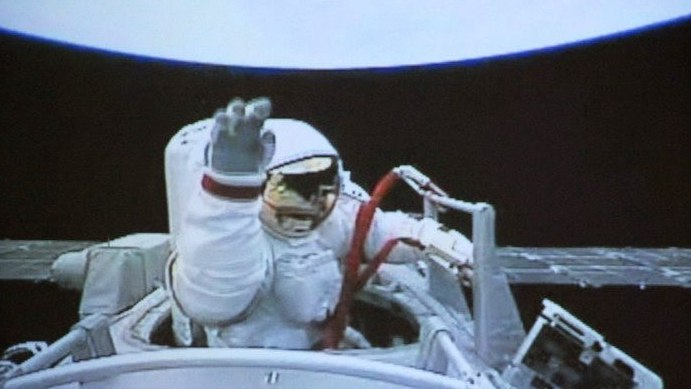
Astronauts Zhang Lu, Wu Fei, and Zhang Hongzhang returned to Earth after completing a historic 210-day mission aboard China's space station. This mission represents a substantial leap in the capabilities of long-term space residency, pushing the boundaries of how long humans can live and work in orbit.
The successful landing at 8:11 p.m. marks the culmination of months of rigorous scientific research and operational tests conducted in the microgravity environment. For the global aerospace community and professionals tracking Asian technological advancements, the Shenzhou-21 mission demonstrates the increasing stability and endurance of China's orbital infrastructure.
As the crew begins their recovery and debriefing process, the data gathered during this record-breaking tenure is expected to provide invaluable insights into human physiology and psychology during extended space missions, paving the way for future endeavors that may stretch toward full-year residencies.
Reference(s):
1 day to 1 year: China's astronauts push boundaries of space residency
cgtn.com