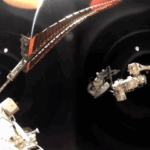
The frontiers of human space exploration have reached a new milestone as the Shenzhou-21 crew safely returned to Earth. At 8:11 p.m. on May 29, the return capsule touched down at the Dongfeng landing site in the Inner Mongolia Autonomous Region of the Chinese mainland.
Astronauts Zhang Lu, Wu Fei, and Zhang Hongzhang concluded a historic 210-day mission aboard China's space station, marking a significant achievement in long-term orbital residency. This record-breaking stay underscores the growing capabilities of the nation's manned space program in sustaining human life in the harsh environment of space and managing the complex logistics of long-duration missions.
The journey to this current level of expertise has been one of rapid acceleration. In 2003, the narrative began with Yang Liwei, who completed China's first crewed spaceflight aboard Shenzhou-5—a mission that lasted just one day. Over the past two decades, the program has consistently rewritten the records for in-orbit duration, transitioning from short-term flights to semi-annual stays.
Looking ahead, the momentum continues this year. China is scheduled to begin a year-long space residency test in 2026, a move that will further expand the possibilities for long-duration missions and potentially pave the way for future deep-space exploration. This progression from a single day to a full year highlights a remarkable era of scientific advancement and ambition in Asian space exploration.
Reference(s):
1 day to 1 year: China's astronauts push boundaries of space residency
cgtn.com