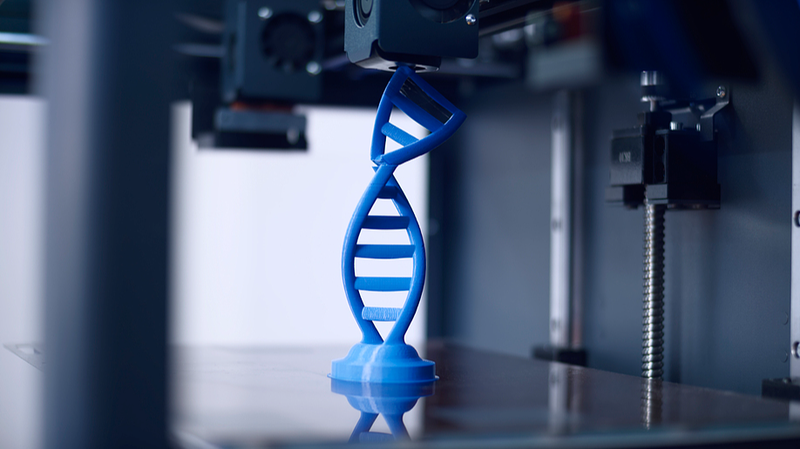
The landscape of industrial manufacturing is undergoing a significant transformation as the 3D printing sector in the Chinese mainland enters a new phase of rapid development. Once confined to laboratories and prototype verification, additive manufacturing is now transitioning swiftly toward industrial production lines and mass consumer markets.
According to recent data from the National Bureau of Statistics, the industry has seen a remarkable surge in the first four months of 2026. The production of 3D printing devices grew by 50.9% year-on-year, signaling a robust expansion in capacity and demand.
This leap toward large-scale mass production is driven by critical improvements in printing efficiency, equipment stability, and material performance, all while production costs continue to decline. These advancements have allowed the technology to move beyond small-batch trial production into a cornerstone of modern manufacturing.
The versatility of these tools is becoming evident across various sectors. Xue Lei, a professional at a 3D printing firm in Xi'an, Shaanxi Province, noted that the application of additive manufacturing has expanded significantly. "In recent years, it has gradually moved from aerospace and high-end equipment into industrial fields including robotics and consumer electronics," Xue explained. He further emphasized that 3D printing is now playing a crucial role as a basic industrial machine tool, fundamentally altering how goods are made.
The growth is not limited to domestic production. The export market for consumer-grade 3D printing devices has seen an explosive increase. From January to April 2026, the Chinese mainland exported 2.46 million units, representing a staggering 100.3% increase year-on-year. Currently, companies in the Chinese mainland produce approximately 90% of the world's consumer-grade 3D printers.
Industry experts suggest that this momentum will continue as the digital transformation of manufacturing accelerates. With a growing global demand for personalized customization, the application boundaries for 3D printing are expected to widen even further, cementing the region's role as a global leader in additive manufacturing innovation.
Reference(s):
cgtn.com