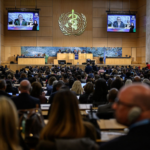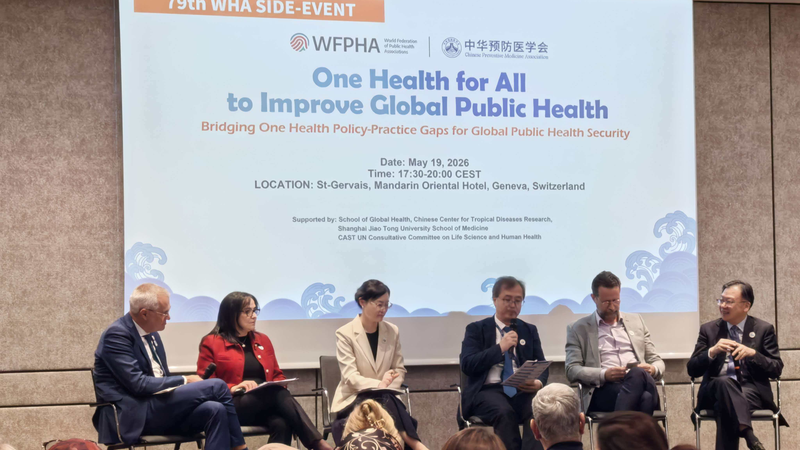
As the 79th World Health Assembly (WHA) unfolds in Geneva this week, from May 18 to 23, the global community is facing a stark reminder that the world's health defenses remain dangerously fragmented. In a side event focused on enhancing global public health, experts including Zhou Xiaonong, chief scientist on parasitic disease control at the Chinese Center for Disease Control and Prevention, and Huan Shitong, senior advisor at the Global Development and Health Communication Center of Tsinghua University, highlighted the critical need for a more integrated approach to health governance.
The urgency of these discussions is underscored by two recent, distinct crises that illustrate the diverse nature of modern biological threats. On May 17, the World Health Organization (WHO) declared a public health emergency of international concern following an Ebola outbreak in the Democratic Republic of the Congo (DRC). Caused by the Bundibugyo virus—a strain lacking a licensed vaccine or specific treatment—the outbreak has already claimed over 140 lives, with more than 570 suspected cases. The virus has since crossed borders into Uganda, threatening to further destabilize a region already grappling with fragility.
While the situation in the DRC highlights the dangers in remote, conflict-affected areas, a separate incident recently demonstrated how global connectivity can accelerate health risks. A cluster of hantavirus infections aboard the Dutch cruise ship MV Hondius triggered international alarm. Linked to the Andes strain, the outbreak resulted in three deaths and 11 infections among passengers and crew. As travelers dispersed from the vessel, multi-country contact tracing became necessary, turning a localized incident into a global monitoring effort.
These dual crises serve as a wake-up call. Whether occurring in a remote jungle or on a luxury vessel carrying international tourists, these outbreaks are not isolated events. According to the experts, they are symptoms of a global health governance system that is no longer fit for purpose in an interconnected world.
The proposed solution lies in the "One Health" approach—a strategy that recognizes the interconnection between people, animals, plants, and their shared environment. By fostering global pledges for pandemic action and moving beyond fragmented responses, the international community can build a more resilient framework capable of detecting and containing threats before they become global catastrophes.
Reference(s):
Geneva Principles for One Health: Global pledges to pandemic action
cgtn.com