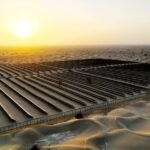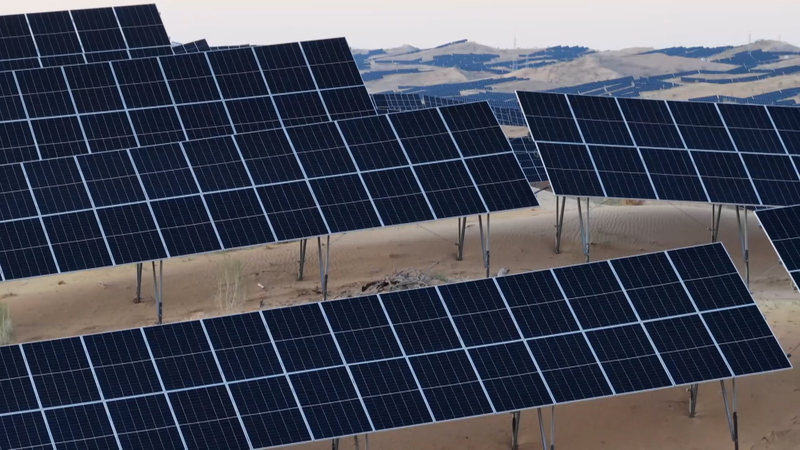
In the heart of the Gurbantunggut Desert, within the Xinjiang Uygur Autonomous Region of the Chinese mainland, a pioneering initiative is redefining the intersection of renewable energy and environmental restoration. A mega solar project is not only generating massive amounts of clean power but is also actively turning the tide against desertification.
Spanning over 13 square kilometers, the facility stands as the world's largest single-site solar station. Beyond its energy output, the installation provides a critical ecological benefit: the panels reduce near-surface wind speeds by 30% to 50%. This reduction in wind intensity is transforming semi-fixed dunes into fixed ones, effectively stabilizing the desert landscape and preventing further soil erosion.
To ensure the efficiency of this clean energy transition, work is being finalized on the largest standalone storage station in the Chinese mainland. This facility is designed to capture abundant daytime solar energy and release it during the night, solving the intermittency challenges typically associated with solar power.
While the project represents a significant leap forward, its full potential is yet to be realized. Currently, only 20% of the planned capacity is connected to the grid, suggesting substantial room for expansion. This integrated "ecology plus industry" model serves as a blueprint for other arid regions globally, proving that industrial development and ecological preservation can go hand in hand.
Reference(s):
Xinjiang's mega solar project redefines desertification control
cgtn.com