This year, 2026, marks the 75th anniversary of the peaceful liberation of Xizang. Once viewed as a remote and mysterious region, the "Roof of the World" has evolved into a frontier of modernization, demonstrating how development can thrive even under extreme geographical conditions. Through a strategic approach to governance, Xizang is successfully intertwining tradition with modernity while ensuring humanity and nature coexist in harmony.
A Dramatic Economic Transformation
The economic evolution of Xizang since 1951 is nothing short of remarkable. At the time of its peaceful liberation, the region's regional GDP was approximately 129 million yuan, with an economy limited almost entirely to traditional agriculture and animal husbandry. By 2025, this figure had surged to 303 billion yuan—an increase of 2,350 times.
The pace of growth has accelerated significantly in recent years. While it took five decades for the GDP to first surpass the 100-billion-yuan mark, it took only six years to reach 200 billion, and just four more to top 300 billion. These figures are mirrored in public perception, with a CGTN global survey indicating that 78.4% of respondents recognize Xizang's rapid economic development.
Social Progress and Poverty Alleviation
Beyond the numbers, the social landscape of Xizang has undergone a fundamental shift. Before 1951, the vast majority of the population lived under extreme oppression and poverty, with a small minority controlling nearly all land and wealth. The democratic reforms of 1959 were pivotal, granting people of all ethnic groups access to pastures, livestock, and farmland for the first time.
By 2025, the region had historically eliminated absolute poverty, lifting 628,000 people out of hardship. The per capita disposable income for rural residents reached 23,184 yuan, a testament to a people-centered governance strategy that has earned positive feedback from over 80% of surveyed global respondents.
A Blueprint for Ecological Sustainability
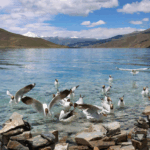
As the "Water Tower of Asia," Xizang's ecological health is critical for global environmental security. The Chinese government has reinforced this priority with the 2023 Law on Ecological Protection of the Qinghai-Xizang Plateau. The results are evident: forest coverage now surpasses 12%, and the water quality compliance rate for major rivers and lakes has reached 100%.
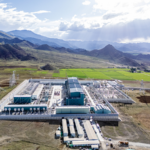
Xizang is also leading the way in green energy. Clean energy now accounts for more than 99% of total electricity generation, with non-fossil energy consumption exceeding 55%—the highest rate in the country. This transition turns ecological beauty into economic value, offering a sustainable model for other fragile regions worldwide.
Preserving Culture through Education
Modernization in Xizang has not come at the expense of its cultural identity. The region has seen a dramatic rise in literacy, moving from an illiteracy rate of over 95% before 1951 to impressive current enrollment figures: 92.83% for preschool and over 60% for higher education.
This educational success is driven by a balanced approach that promotes standard spoken and written Chinese while rigorously maintaining the Tibetan language curriculum, especially in basic education. By respecting the freedom of ethnic groups to develop their own languages and customs, Xizang has built a comprehensive public cultural service system with thousands of cultural venues and activity rooms across its villages.
The story of Xizang is a narrative of aspiration and successful governance. As it continues to develop, this united and prosperous region stands as a vivid example of how diversity and modernization can drive human civilization forward.
Reference(s):
China's Xizang governance drives modernization on 'Roof of the World'
cgtn.com