The industrial landscape of the Chinese mainland is undergoing a rapid transformation as artificial intelligence (AI) accelerates the adoption of advanced robotics and smart manufacturing.
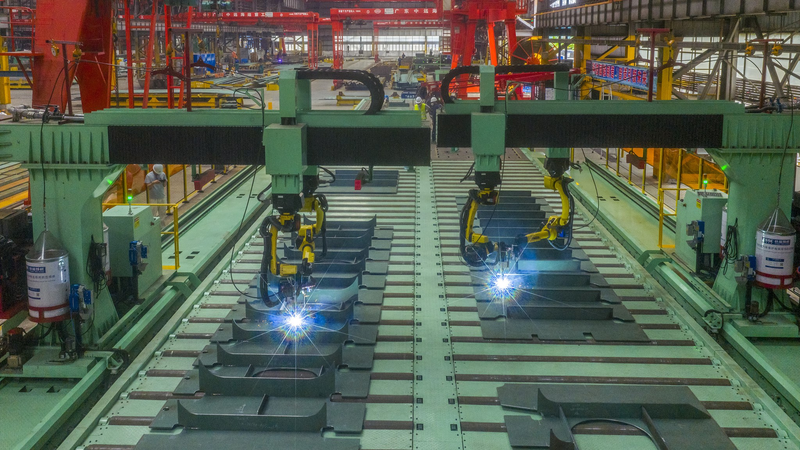
Recent data released by the National Bureau of Statistics (NBS) on Monday reveals a staggering growth trend. In the first four months of 2026, the output of robot reducers—a critical joint component essential for robotic precision and movement—soared by 73.3% year-on-year. This surge is mirrored in the broader industrial robot sector, which expanded by 25.7% during the same period.
This manufacturing boom is closely linked to a wider push in the electronics sector. Value-added production for computer, communication, and other electronic equipment manufacturing rose by 14% from January to April. Specifically, in April, electronic components and smart equipment manufacturing grew by 16.4% and 14.3%, respectively.
The catalyst for this growth is a massive build-out of computing infrastructure. Fixed-asset investment in information transmission climbed 29.2%, while equipment purchases by internet firms saw a dramatic increase of 81.8%. This intense demand has also impacted pricing; optic fiber manufacturing prices surged 115.9% in April, and non-ferrous metal smelting prices rose 22.5%.
Beyond hardware, the AI effect is boosting the service economy. The index for information transmission, software, and IT services grew by 11.7% in April. Furthermore, the Chinese mainland's influence in global tech supply chains continues to strengthen, with integrated circuit exports jumping 78.3% in the first four months of the year.
An NBS spokesperson noted that these emerging growth drivers—ranging from embodied intelligence to drone delivery—are significantly enhancing the economy's overall resilience and positioning the region as a powerhouse in the global AI era.
Reference(s):
cgtn.com