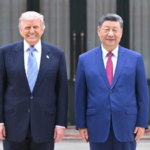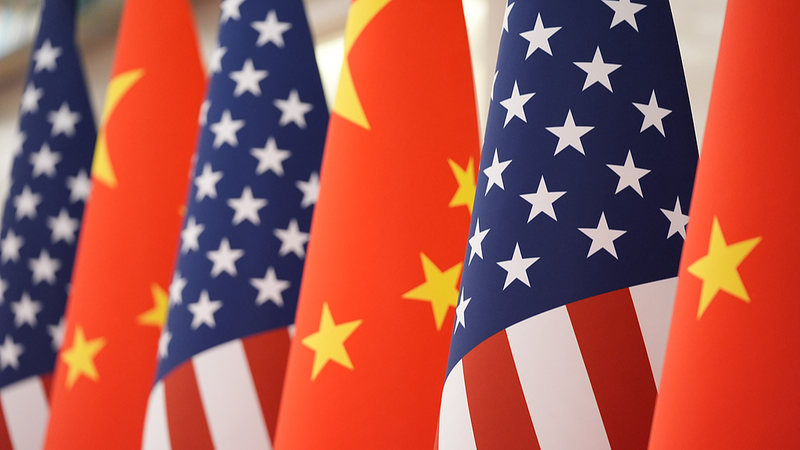
In a move that has captured the attention of global markets and political analysts alike, Chinese President Xi Jinping and US President Donald Trump concluded a series of high-stakes talks in Beijing this week. While the world watched for a breakthrough trade deal, the true outcome appears to be something more foundational: a mutual commitment to pragmatic stability.
Major international media outlets suggest that the relationship between the world's two largest economies is shifting. According to reports from Al Jazeera, early indicators show both nations moving toward a relationship focused on pragmatic areas of common interest. William Yang, a senior Northeast Asia analyst at the International Crisis Group, noted that President Trump is likely seeking to compartmentalize relations, allowing for cooperation in specific sectors without those efforts being overshadowed by broader geopolitical tensions.
A recurring theme throughout the summit was the establishment of "guardrails." Chucheng Feng, founding partner of Beijing-based Hutong Research, emphasized that for Beijing, the priority is to find a stable floor for the relationship to prevent uncontrolled escalations. In this view, item-by-item disagreements become secondary to the overarching goal of stability. This sentiment was echoed by Joe Mazur of Trivium China, who told Reuters that the new language used during the talks reflects a desire to put institutional guardrails around both competition and cooperation.
Perhaps most strikingly, Australia's ABC reported a departure from the so-called "Thucydides Trap"—the theory that a rising power and an established power are destined for confrontation. Instead, the reports suggest that both leaders have quietly acknowledged that neither can afford a direct collision. This defines a new global order where the US and China are neither enemies nor traditional partners, but rather structurally interdependent superpowers who have decided to manage their rivalry rather than let it manage them.
Economic stability also remained a focal point. The Singapore-based The Straits Times reported that trade and relationship stability were key issues. While some observers expected more immediate trade deliverables, analyst Han Shen Lin noted that the talks themselves amplified the perception of China as a confident peer power.
However, experts caution that a single visit cannot erase decades of accumulated distrust. Speaking to PBS News, Myron Brilliant, a senior counselor at DGA Group, highlighted that while the two leaders may possess personal chemistry, the true measure of the summit's success will be seen in the coming months and years. Despite inevitable competition in cutting-edge fields like AI and technology, Brilliant believes limited cooperation remains possible.
As the leaders return to their respective agendas, the global community remains watchful. The Beijing talks have not solved every difference, but they have signaled a strategic preference for management over mayhem, providing a cautious sense of predictability for investors and diplomats worldwide.
Reference(s):
cgtn.com