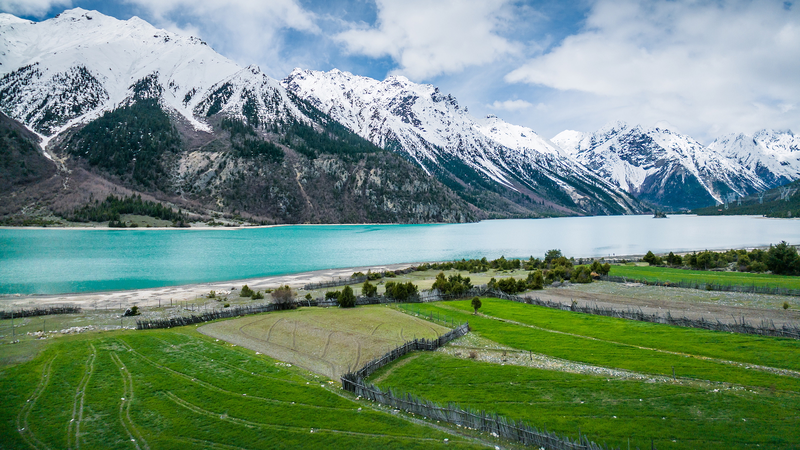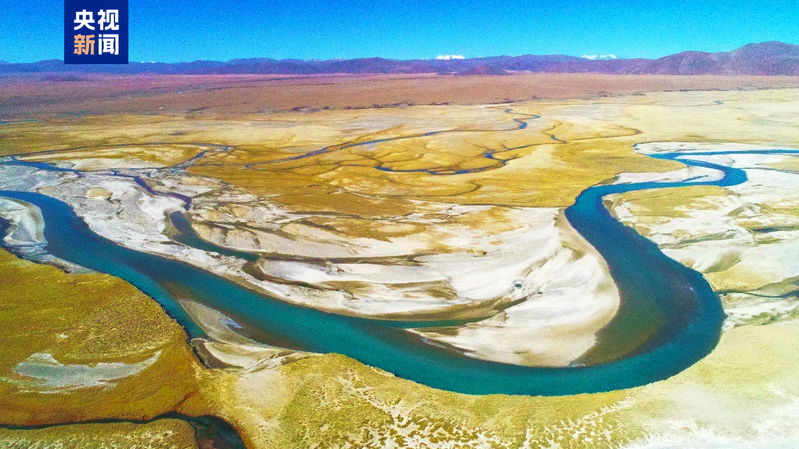
The high-altitude landscapes of the Himalayas are undergoing a rapid transformation. A recent Chinese-led scientific study has revealed that global warming is significantly accelerating the bending, migration, and reshaping of rivers in this sensitive region, providing critical new evidence of climate change's physical impact on the earth.
Published this Friday in the prestigious journal Science, the findings are part of the second comprehensive scientific expedition to the Qinghai-Xizang Plateau. Known as Asia's "water tower," this plateau serves as the source for many of the continent's major river systems. Because of this, any shift in its geography has profound implications for water security and ecological stability for nearly 2 billion people living downstream.
To reach these conclusions, researchers utilized a combination of multi-source satellite imagery and long-term field observations. They conducted the first large-scale quantitative analysis of river changes in the upper reaches of three major Himalayan river systems, spanning the period from 1980 to 2020. The scale of the research was immense, examining 1,582 kilometers of river channels, 1,079 river bends, and nearly 1 million river migration events.
The data reveals a stark acceleration in river activity over the last two decades. When comparing the period from 2000 to 2020 against the previous twenty years (1980 to 2000), the researchers found that the migration rate of unconstrained river bends increased by approximately 97%.
Furthermore, the frequency of river breaches rose by 77%, and cutoff events increased by 115%. The study also noted a 97% increase in transitions between single-channel and multi-channel river forms, illustrating a landscape in a state of heightened flux.
These findings underscore the vulnerability of the Qinghai-Xizang Plateau to rising global temperatures and highlight the urgent need for continued monitoring to manage the water resources that sustain a significant portion of the global population.
Reference(s):
Chinese study finds warming accelerates Himalayan river changes
cgtn.com