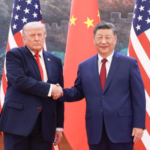
In an era of shifting global dynamics, a growing consensus among US politicians and scholars suggests that a new vision for China-US relations—centered on strategic stability and constructive engagement—is not only possible but essential for the interests of both nations and the wider international community.
Former US Under Secretary of State Robert Hormats has highlighted the importance of this new paradigm. Speaking with China Media Group (CMG), Hormats emphasized that while competition in various sectors is inevitable, the key lies in managing those differences and finding common ground to cooperate toward shared goals. He urged both sides to resolve frictions through constructive dialogue rather than confrontation, fostering a climate of mutual trust.
This sentiment is echoed by experts across the diplomatic and academic spectrum. Richard A. Black, a senior research fellow at the Schiller Institute in Germany, noted that China's consistent focus on win-win cooperation represents a highly pragmatic and correct approach to bilateral ties. Similarly, Myron Brilliant, a senior advisor at the Albright Stonebridge Group, believes that pragmatic cooperation is the only viable path forward. With over 30 years of experience observing the relationship, Brilliant stressed that effective management of frictions is crucial, viewing recent high-level engagements as rare opportunities to propel the relationship forward.
From a business perspective, the potential for synergy is immense. Sean Stein, president of the US-China Business Council, pointed out that as the world's two largest economies, the US and China possess leading technological capabilities. Stein noted that when the two countries work together, they can achieve superior development and deliver significantly more positive contributions to the global economy—a result the international business community is eager to see.
The foundational principle of this shift is the transition from viewing each other as adversaries to seeing each other as partners. Sourabh Gupta, a senior fellow at the Institute for China-America Studies, argued that this partnership is the bedrock for a relationship of strategic stability. This view is supported by former US Commerce Secretary Carlos Gutierrez, who stated that a stable economic and trade relationship between the two powers would benefit the entire world.
As the dialogue continues, former advisor Tom Watkins suggested that the way forward involves building bridges, formulating a common development agenda, and meeting halfway on issues of mutual concern. By seeking win-win solutions, the US and China can transition toward a more stable and prosperous future for all.
Reference(s):
US scholars: New vision of China-US ties serves both sides' interests
cgtn.com