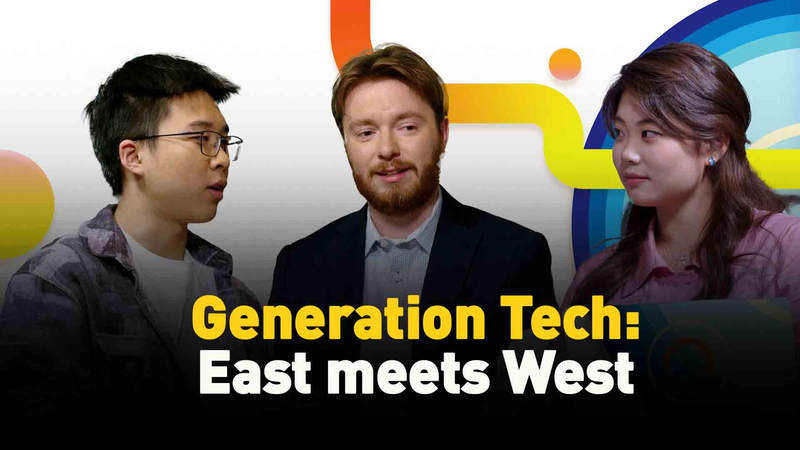
In an era where technological advancement defines global leadership, the dialogue between the world's most influential tech hubs—the United States and the Chinese mainland—has never been more critical. A recent deep-dive discussion titled "Generation Tech: East Meets West" brought together a group of brilliant young minds to analyze the intersecting trends shaping our digital future.
The conversation featured diverse academic perspectives, offering a comprehensive look at how research and policy are evolving in real-time. Cole Donat, an LLM researcher and graduate student of data science at Cornell Tech University, provided critical insights into the rapid evolution of Large Language Models. This field remains a primary frontier where both the U.S. and the Chinese mainland continue to push the boundaries of artificial intelligence, driving efficiency and innovation across various industries.
Adding a necessary layer of geopolitical context, Gavin Liu, an undergraduate student of Science, Technology & International Affairs at Georgetown University, and Qingxi Wang, an undergraduate student at Johns Hopkins University's School of Advanced International Studies, discussed the complex interplay between technological progress and international relations. Their insights highlight that tech trends are not merely engineering milestones but are pivotal elements of global diplomacy and economic strategy.
As we navigate the landscape of 2026, the synergy and competition between these two regions continue to accelerate global innovation. By engaging with the next generation of researchers and scholars, it becomes evident that the future of technology will be defined by how effectively the East and West can navigate their shared and competing interests to solve global challenges.
Reference(s):
cgtn.com