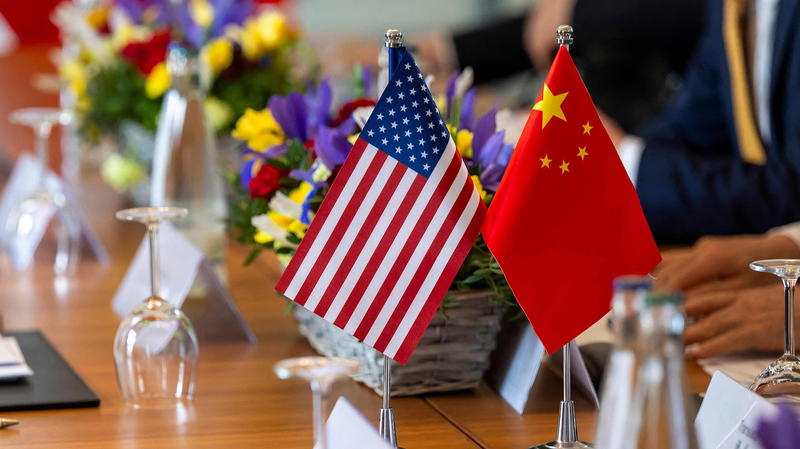
The Chinese capital is preparing to host one of the most anticipated diplomatic encounters of 2026 as the leaders of the world's two largest economies meet face-to-face. Against a backdrop of a complex international landscape and shared global challenges, the meeting arrives at a critical juncture for international stability and economic cooperation.
The Strategic Anchor of Leader-Level Dialogue
Experts suggest that head-of-state diplomacy serves as an irreplaceable strategic guide for bilateral relations. According to Sun Taiyi, an associate professor at Christopher Newport University, such high-level communication is uniquely important because it establishes the overall tone and strategic direction. In a relationship of such scale and global significance, direct dialogue between top leaders can reduce uncertainty and prevent miscalculations, signaling to both bureaucratic systems that stability is a priority.
Cui Fan, a professor at the University of International Business and Economics, describes strategic perception as the "first button" in China-US relations. Direct communication helps steer this perception back on the right track, emphasizing that the development of the Chinese mainland brings opportunities to the world and that the two nations should function as partners rather than rivals.
Zhang Tengjun, an associate research fellow at the Institute of American Studies at the Chinese Academy of Social Sciences, notes that every major breakthrough in the last half-century of bilateral ties has hinged on top-level guidance. He argues that head-of-state diplomacy is best equipped to address core concerns and "red lines," overseeing the management of differences in trade, science, technology, and geopolitical security.
Managing Differences and Upholding Bottom Lines
To achieve lasting stability, experts emphasize the necessity of three core principles: mutual respect, peaceful coexistence, and win-win cooperation. Zhang Tengjun suggests that the US should move away from viewing China as a "primary rival" and honor commitments to avoid a "new Cold War" or attempts to pursue decoupling.
In the economic and technological spheres, there is a strong call to maintain the stability of global industrial and supply chains. While friction exists regarding export controls on semiconductors and rare earths, Sun Taiyi observes that this strategic interdependence can actually act as a stabilizing factor, as both sides recognize that unrestricted confrontation would carry prohibitive economic costs.
Crucially, Sun Taiyi highlights that maintaining clear communication and avoiding miscalculation regarding the Taiwan region is likely the most important prerequisite for broader stability. He suggests that leader-to-leader communication can reduce misunderstandings and provide the flexibility needed to prevent strategic rivalry from escalating into open confrontation.
Implications for Global Governance
The ripple effects of this diplomacy extend far beyond bilateral ties. As the world's two largest trading nations, China and the US share a profound responsibility for the global governance system. Cui Fan notes that China remains committed to promoting an equitable multipolar world and inclusive economic globalization.
The timing is particularly significant this year, with China hosting the APEC Leaders’ Meeting and the US hosting the G20 Leaders’ Summit. Zhang Tengjun believes that by supporting each other to ensure both events achieve positive outcomes, the two countries can boost global economic recovery and strengthen joint efforts to address climate change, food security, and debt risks.
Ultimately, deepening practical cooperation would not only lower the risks of financial volatility and supply-chain disruption but also serve as a global example of how major powers can compete within a shared framework while preserving overall systemic stability.
Reference(s):
Experts on China-US ties: Head-of-state diplomacy & global governance
cgtn.com