Unlocking Ancient Secrets
In a landmark achievement for paleoanthropology, scientists in China have successfully recovered molecular information from the teeth of Homo erectus fossils dating back 400,000 years. This breakthrough, published recently in the journal Nature, provides the first-ever molecular data for this ancient human ancestor, offering a new lens through which to view the evolutionary journey toward modern humans.
The research was conducted by a dedicated team at the Institute of Vertebrate Paleontology and Paleoanthropology under the Chinese Academy of Sciences. For decades, the genetic characteristics of Homo erectus—one of the earliest human ancestors to migrate out of Africa and settle across Eurasia and Southeast Asia—remained a mystery due to the extreme difficulty of preserving ancient DNA over hundreds of millennia.
A Unified Evolutionary Story
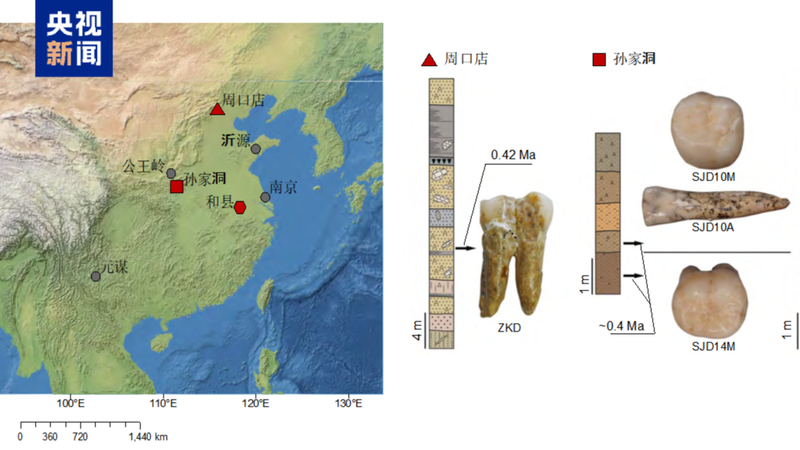
By analyzing six tooth fossils from three distinct sites—Zhoukoudian in Beijing, Hexian in Anhui Province, and Sunjiadong in Henan Province—researchers discovered that these populations belonged to the same evolutionary lineage. This finding helps map the distribution and movement of ancient humans across the Chinese mainland with unprecedented clarity.
Perhaps most intriguing is the study's suggestion regarding the genetic legacy of Homo erectus. The evidence indicates that genetic material from these ancient populations may have indirectly entered modern human populations through the Denisovans. This discovery helps address a long-standing debate in the scientific community about whether Homo erectus shared a direct genetic connection with modern humans.
Cutting-Edge Science and Innovation
To achieve these results without damaging the priceless fossils, the team employed a sophisticated, minimally invasive approach. They first utilized non-destructive screening for ancient proteins, followed by a precise acid-etching technique to extract minute amounts of material from the enamel surface. To ensure the accuracy of their findings, the team used three specialized software systems for rigorous cross-verification, identifying multiple endogenous enamel proteins.
This achievement significantly expands the horizons of proteomic research in East Asia, pushing the time limit for such studies from approximately 160,000 years ago back to at least 400,000 years ago.
New Tools for Future Discovery
Beyond the evolutionary insights, the research team developed a pioneering method for identifying the sex of ancient human fossils based on protein characteristics. This new tool is particularly valuable for studying remains that lack clear morphological features or preserved DNA, providing a reliable way to determine the sex of tooth fossils.
As researchers continue to analyze the molecular blueprints of our ancestors, this study stands as a testament to the power of interdisciplinary science in reconstructing the complex history of humanity.
Reference(s):
Chinese scientists recover first molecular data from Homo erectus
cgtn.com