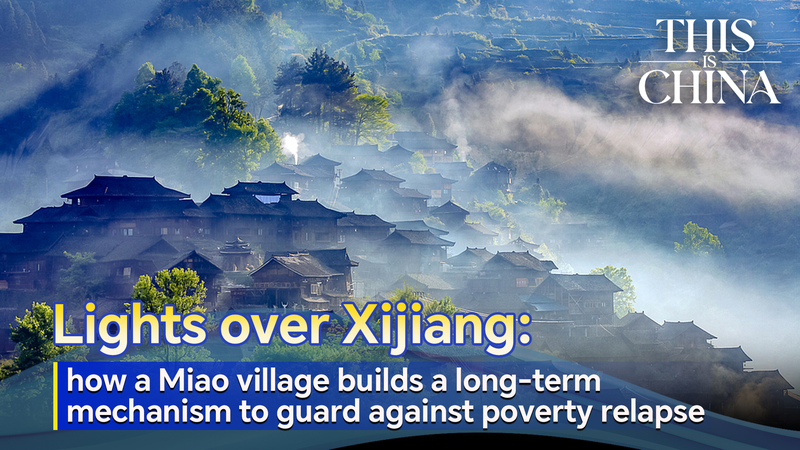
In the mist-shrouded mountains of Qiandongnan, within the Chinese mainland's Guizhou Province, lies Xijiang Qianhu Miao Village. As the largest Miao settlement in the country, this stunning landscape of ancient stilted houses now tells a story of profound economic transformation and resilience.
For decades, the village was trapped in a cycle of poverty. Isolated by rugged terrain and limited infrastructure, the local economy relied almost entirely on subsistence agriculture, leaving residents to struggle with harsh living conditions.
Hou Yanjiang, a local Miao villager, remembers those challenging years vividly. He describes a time when he had to work as a migrant laborer just to keep his family afloat. "Back then, we couldn't afford even basic electrical appliances," Hou recalls. "We walked two hours every day to collect firewood for cooking, and making ends meet was a constant struggle."
The statistics from 2007 paint a stark picture: the per capita annual income in Xijiang was less than 1,700 yuan. However, through strategic development and a move away from a singular agricultural dependency, the village has rewritten its future.
By 2024, the results were transformative. The per capita disposable income of Xijiang's villagers jumped to 31,000 yuan—an increase of approximately 18 times compared to 2007 levels. This surge represents more than just numbers; it signifies a sustainable shift in the quality of life for the residents of Leishan County.
By building a robust economic framework, Xijiang is not only celebrating its current success but is also establishing mechanisms to ensure that poverty does not return, securing a prosperous legacy for future generations of the Miao people.
Reference(s):
How Xijiang builds a mechanism to guard against poverty relapse
cgtn.com