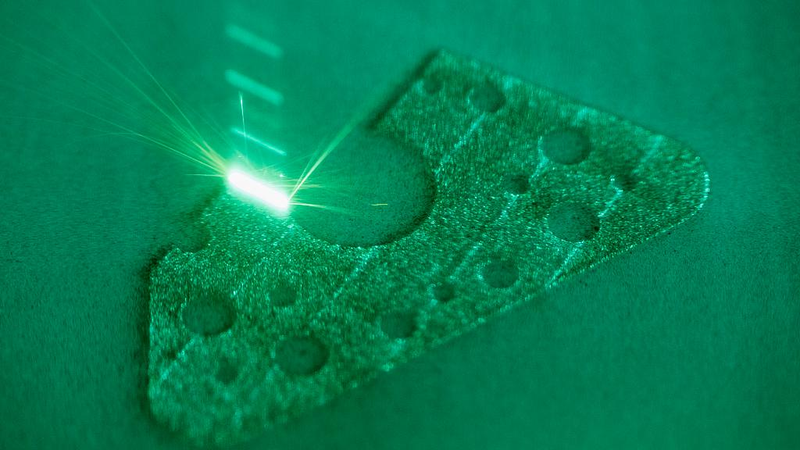
In a significant leap forward for space manufacturing capabilities, China has successfully completed a groundbreaking demonstration of metal 3D printing technology in orbit, the Institute of Mechanics of the Chinese Academy of Sciences announced recently. This achievement marks a pivotal step toward a future where essential components for space missions can be manufactured on-demand, far from Earth.
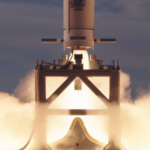
The successful experiment was conducted aboard the previously launched Qingzhou Cargo Spacecraft Test Vehicle, a collaboration between the Institute of Mechanics and the CAS Innovation Academy for Microsatellites. It verified a core technology known as metal additive manufacturing under the harsh and unique conditions of space.
Engineers highlight that replicating Earth-based manufacturing in space is fraught with challenges. Microgravity environment profoundly affects fundamental processes like metal droplet transition, liquid bridge stability, and molten pool evolution. Beyond the science, the team also had to solve complex engineering puzzles: designing a lightweight device that could withstand violent launch vibrations, adapting to the spacecraft's limited energy supply, and ensuring safe, autonomous, and remotely controllable operations.
During the test, the on-board 3D printing device responded to commands from ground control. Utilizing a laser wire-feed process, it carried out metal melt deposition in a stable, smooth manner. The demonstration proved the reliability of critical functions like remote start-stop operations, payload-spacecraft compatibility, fully automated process execution, and the transmission of data and images back to Earth.
This technological breakthrough has the potential to fundamentally transform space mission logistics. It could shift the paradigm from the traditional 'bring what you need' model to an innovative 'make what you need' approach. Future applications are vast, ranging from the in-orbit manufacturing and repair of space station components to producing spare parts for long-term facilities and even supporting autonomous, deep-space exploration missions where resupply from Earth is impossible.
The research team now plans to partner with other institutions to conduct more extensive testing under longer durations and more complex scenarios. The focus is on accelerating the transition from this promising technology demonstration to practical, routine use in orbit, paving the way for more sustainable and ambitious space exploration.
Reference(s):
China successfully demonstrates metal 3D printing technology in space
cgtn.com