HUILI, Sichuan—Nestled at the southern tip of Sichuan Province, Huili Ancient Town stands as a silent yet eloquent witness to centuries of history. More than just a collection of old buildings, it is a meticulously preserved time capsule from the Ming Dynasty, offering a tangible link to the ancient trade routes that once connected empires.
Established over 2130 years ago in 111 BCE, Huili was a crucial waypoint on the legendary Southern Silk Road, a network of paths that facilitated trade and cultural exchange between the Chinese mainland and Southeast Asia. Its strategic importance is etched into its very layout. The town is centered around a majestic Bell and Drum Tower, constructed between 1723 and 1735, with streets radiating outwards to four ancient gates.
One of the town's most prized architectural marvels is the northern gate tower, known as the Gongji Tower. First built in 1398, it boasts a rare construction style where Yuan Dynasty foundations support a Ming Dynasty superstructure—a feature so distinct it is locally celebrated as a "Yuan foundation with Ming superstructure." This unique blend of eras is a fascinating study for historians and architects alike.
Beyond its military and trade significance, Huili was also a cradle of scholarly achievement. Kejia Lane, a modest alleyway just 100 meters long, tells an extraordinary story. During the Ming and Qing dynasties, this single lane produced over 390 high-level scholars who passed the rigorous imperial examinations—a testament to the town's deep-rooted cultural traditions.
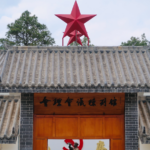
Today, walking through Huili is a step back in time. The well-preserved network of Ming and Qing residences, ancestral halls with their characteristic grey-tile roofs, timber walls, and smooth stone-paved streets, retains the authentic charm of a historic border town. For travelers, scholars, and anyone captivated by Asia's rich heritage, Huili offers an unfiltered glimpse into a past where commerce, culture, and scholarship converged on the ancient roads of Asia.
Reference(s):
cgtn.com