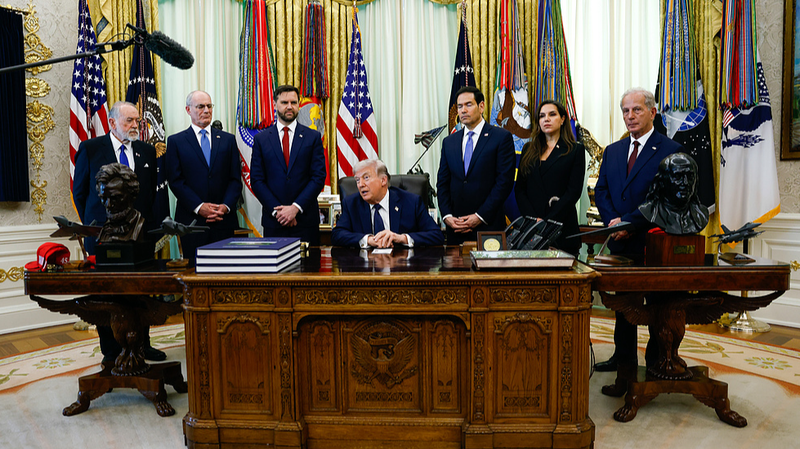
The fragile ceasefire between Israel and Lebanon has been granted a three-week extension, offering a crucial respite in ongoing regional tensions. The announcement, confirmed by US President Donald Trump on Thursday, April 23, 2026, follows a second round of ambassador-level talks held in Washington, D.C.
While the move signals a temporary de-escalation on one front, the broader geopolitical landscape remains fraught. President Trump, addressing reporters at the White House, underscored a deliberate and patient approach regarding Iran. "I don't want to rush myself," he stated, framing the potential for higher costs as a necessary step toward achieving the ultimate goal of a nuclear-free Iran. He emphasized that any future agreement would adhere strictly to US terms and timelines.
This firm stance coincides with a significant military buildup in the region. The arrival of the USS George H.W. Bush aircraft carrier on Thursday marks the third US carrier now operating in the Middle East, underscoring a posture of formidable readiness. President Trump also outlined specific rules of engagement, ruling out the use of nuclear weapons against Iran but authorizing the destruction of any Iranian boats caught laying mines in the strategically vital Strait of Hormuz.
The path to broader diplomatic resolution appears challenging. Prospects for another round of peace talks, potentially in Pakistan, remain uncertain, with little indication of an imminent return to negotiations to resolve the standoff in the Gulf.
Adding to the complex calculus, Israeli Defense Minister Israel Katz stated on Thursday that Israel stands prepared to "resume the war against Iran," suggesting the current calm is tenuous and heavily dependent on continued US strategic decisions.
The developments highlight the intricate balance of diplomacy and deterrence shaping security dynamics in the Middle East, with implications for global energy markets and international stability.
Reference(s):
Israel-Lebanon truce extended by 3 weeks, Trump no rush on Iran deal
cgtn.com