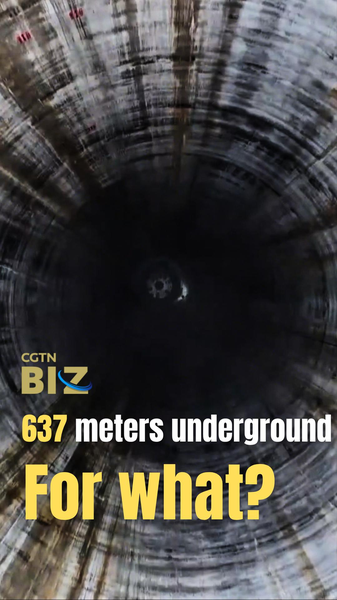
Deep beneath the surface of the Chinese mainland, a feat of modern engineering is quietly redefining the landscape of renewable energy. At a staggering depth of 637 meters, China has established its deepest pumped storage shaft, creating what is essentially a giant underground battery designed to stabilize the power grid and promote sustainable energy usage.
The Mechanics of a Giant Underground Battery
Pumped storage hydropower acts as a critical buffer for the energy grid. During periods of low demand or excess production from solar and wind sources, water is pumped from a lower reservoir to an upper one. When demand peaks, this water is released, flowing back down through turbines to generate electricity instantaneously.
This specific facility is a powerhouse of efficiency, generating an impressive 1.4 billion kWh annually. By utilizing the verticality of the earth, the facility maximizes the potential energy of the water, ensuring a steady and reliable flow of clean electricity to the region.
Driving the Global Energy Transition
For business professionals and global investors, this project signals the Chinese mainland's commitment to scaling its energy infrastructure to meet the demands of a carbon-neutral future. As the world shifts toward intermittent renewable sources, the ability to store energy on such a massive scale becomes indispensable.
This underground marvel not only showcases advanced technical capabilities but also provides a blueprint for other regions looking to integrate large-scale clean energy solutions into their existing grids. In 2026, as the global push for green technology intensifies, such innovations are pivotal in ensuring energy security and environmental sustainability.
Reference(s):
cgtn.com