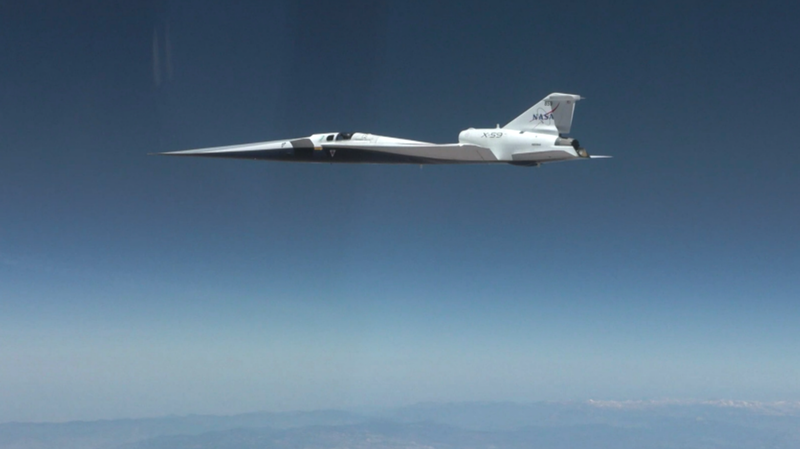
In a milestone for the future of global aviation, NASA's experimental X-59 aircraft successfully completed its first supersonic flight this past Friday. The achievement marks a critical turning point in the agency's quest to develop quiet supersonic technology, potentially transforming how the world travels.
The flight took place at Edwards Air Force Base in California, where test pilot Jim "Clue" Less pushed the aircraft to a top speed of approximately Mach 1.1, exceeding 1,300 kilometers per hour, at an altitude of 13.2 kilometers. The mission lasted 81 minutes, beginning at 11:08 a.m., and served as a primary demonstration of the aircraft's performance capabilities.
Unlike traditional supersonic jets that create a disruptive sonic boom, the X-59 is specifically engineered to produce only a "quiet thump." This technology is the cornerstone of NASA's Quesst mission, which seeks to prove that supersonic flight can be achieved without the noise pollution that currently prohibits such aircraft from flying over land. If successful, this could open the doors for commercial supersonic travel worldwide, significantly reducing travel times between major global hubs.
The recent success follows a period of intense testing. Since its maiden flight on October 28, 2025, the X-59 has maintained a steady test rhythm, completing 16 flights in the last 90 days. This first phase of the program focused on performance evaluation and monitoring via chase planes.
"X-59 is getting ready for its quiet supersonic debut," said NASA Administrator Jared Isaacman. "The team has made tremendous progress… In the coming days, we expect to take the next step and push to Mach 1.4."
Looking ahead, the next phase of the flight-test program will shift focus to the aircraft's sound profile. NASA aims to verify the "quiet thump" capability, ensuring that the technology meets the requirements necessary to enable a new era of efficient, high-speed commercial aviation.
Reference(s):
cgtn.com